Eighteen months after a kitchen renovation, an operations director walks the dish room and sees hairline pitting along the seams of an epoxy floor. The spec was standard commercial-grade — the same epoxy installed in thousands of restaurant kitchens without issue. The failure happened because senior living commercial kitchen flooring lives under different demands: bleach-diluted sanitation cycles run daily to meet C. difficile protocols, and the infection control program treats a degraded floor as a citable finding.
This article breaks down what actually meets the three-pillar surface specification — slip resistance, chemical resistance, and antimicrobial performance — that senior living back-of-house is held to.
Why Senior Living Kitchens Are Held to a Stricter Surface Standard
A commercial kitchen inside a senior living community sits at the intersection of foodservice code, healthcare code, and workplace safety code — three frameworks a hotel restaurant kitchen faces individually, but that senior living dietary services is judged against simultaneously. Three pressures converge on the surface spec:
- An older workforce carries higher slip-injury cost: Dietary teams skew older than restaurant averages, and layouts are typically specified above ADA minimums — covered in our companion piece on ADA kitchen design standards for senior living facilities. The surface spec is the safety counterpart to the layout spec.
- Residents are immune-vulnerable: Long-term care residents show high baseline colonization rates for antibiotic-resistant organisms; many admissions arrive already colonized with MRSA or VRE. Any surface downstream of resident tray return carries a real pathogen load, not a hypothetical one.
- Survey findings hit dietary: Under CMS Requirements of Participation, F-tag 880 applies facility-wide. Surveyors routinely cite dietary services for degraded floor seams, damaged coving, and porous wall surfaces that can't be properly disinfected.

The Three Specification Pillars
Slip Resistance — What OSHA Actually Requires (and Why DCOF 0.42 Isn't the Ceiling)
Slip resistance is measured, not eyeballed. Three standards define the field:
- OSHA 1910.22 — the general industry walking-working surfaces standard — requires floors to be kept clean, dry, and slip-resistant. It sets no numeric threshold; the burden falls on the employer to match materials to the hazard.
- FDA Food Code Section 6-201.11 requires floors to be smooth, durable, and easily cleanable; associated industry guidance recommends a static coefficient of friction of at least 0.6 for kitchen floors.
- ANSI A326.3 — the current dynamic coefficient of friction (DCOF) standard for hard surface materials — specifies a minimum DCOF of 0.42 (wet) for level interior walkways expected to be walked on when wet.
The 0.42 threshold is the industry floor, not the spec a senior living kitchen should target. Dietary teams work 14-hour days on floors wet with sanitation solution, food debris, and cart condensation. A floor at 0.42 DCOF in a test lab may not hold 0.42 after 24 months of daily wear. Materials that test in the 0.55–0.70 DCOF (wet) range — and continue to expose aggregate as the surface wears — hold slip resistance over the service life of the floor.
Chemical Resistance to Daily High-Alkaline Sanitation
The chemistry hitting a senior living kitchen floor is more aggressive than a restaurant kitchen floor — frequency and concentrations run higher. A typical daily cycle includes:
- Chlorinated alkaline degreasers at pH 12–14 for grease and food soils
- Quaternary ammonium sanitizers on food-contact and adjacent surfaces
- Sodium hypochlorite at 1:10 dilution during outbreak or symptomatic-resident protocols — a concentration many state health departments explicitly require during active transmission (see the Minnesota Department of Health long-term care C. diff toolkit)
- Enzymatic detergents in dish and warewash rooms
- Peracetic acid in some texture-modification zones
Standard commercial epoxy begins to soften and pit under repeated high-alkaline exposure at 18 to 36 months of daily service. Failures show up first at seams, floor drains, and equipment leg contact points.
Urethane cement (also called urethane mortar or polyurethane concrete) holds against this chemistry. Its cross-linked polymer structure resists pH 1 to pH 13 exposure without degrading, and its thermal expansion coefficient matches concrete. Chemical-resistant epoxies perform too, but cost more and are often value-engineered out of projects that then fail early.
Tip: Ask any flooring bidder to specify not just "commercial epoxy" but the actual product data sheet with certified chemical resistance to sodium hypochlorite at 5.25% (household bleach, undiluted). If the data sheet doesn't show it, the product isn't spec'd for a senior living kitchen.
Antimicrobial Performance and Alignment with Infection Control Programs
A senior living kitchen isn't a standalone facility — it's part of a building whose infection prevention and control program is written under CMS F-tag 880. That program covers surface hygiene facility-wide, and the surveyor doesn't distinguish between the dietary floor and the med-surg corridor when auditing compliance.
The pathogens of concern are the same ones the rest of the facility is fighting:
- MRSA — survives on dry surfaces for hours to weeks, per CDC MRSA prevention guidance
- Clostridioides difficile — spore-forming, persistent for months, killed only by EPA List K registered products
- Norovirus — outbreak-prone in congregate dining populations
- VRE (vancomycin-resistant Enterococcus) — persistent on environmental surfaces
Antimicrobial performance in flooring and surface materials comes in two forms:
- Topical coatings — an antimicrobial additive in a sealer or top layer. Loses efficacy as the surface wears.
- Integral antimicrobial materials — silver ion, zinc, or copper additives distributed throughout the material body. Continues to inhibit microbial growth as the surface wears down.
For a floor that will see 15+ years of service, integral antimicrobial is the spec worth paying for. Silver ion is the most widely used, with documented efficacy against MRSA, C. difficile, and norovirus.
Note: Antimicrobial flooring supplements — it does not replace — the facility's disinfection protocol. Both are required components of the infection control program.
Flooring Systems: How Common Materials Perform Across the Three Pillars
The five flooring systems most commonly installed in senior living commercial kitchens, compared:
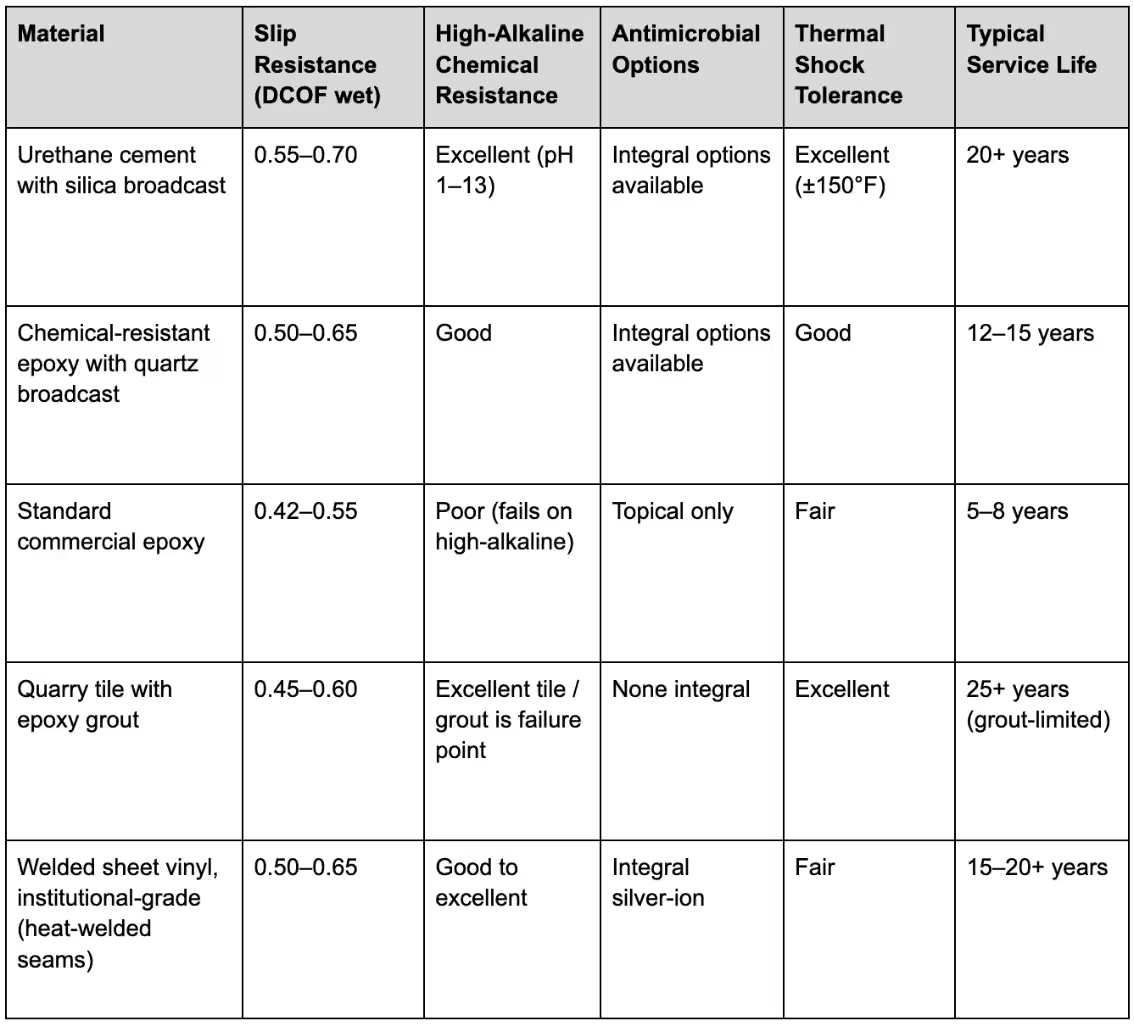
The functional shortlist for most senior living kitchens is two options: institutional-grade welded sheet vinyl with integral silver-ion antimicrobial — the primary spec across most kitchen environments, delivering the three-pillar performance envelope plus underfoot cushioning and acoustic dampening over a 14-hour service day — and urethane cement with silica broadcast as the harder-duty alternative for facilities prioritizing maximum thermal shock tolerance and hardest chemical resistance. Standard commercial epoxy is a category to avoid regardless of upfront cost savings.
Wall Panels, Coving, and Work Surfaces
Surface specification doesn't end at the floor. Wall panels, coving, and work surfaces all sit inside the infection control program and all face daily chemical exposure. Materials spec also interacts with kitchen zoning — covered separately in engineering a senior living kitchen for multi-diet, high-volume production — since different production zones face different chemical loads.
Wall Panel Materials
Fiberglass reinforced panel (FRP) is the workhorse wall material in commercial kitchens. For a senior living kitchen, specify:
- Class A fire-rated FRP for occupancies attached to healthcare/residential
- Antimicrobial FRP (silver-ion integrated) in food-prep and warewash zones
- Sanitary stainless wall cladding (typically 20-gauge Type 304) in immediate splash zones behind cook lines, dish tables, and pot sinks
The failure mode is rarely the panel itself — it's the joint. Trim strips, seam fasteners, and silicone caulking are where daily bleach exposure degrades the assembly first.
Coved Base and Transitions
The floor-to-wall junction is the single highest-failure point in any commercial kitchen. Water, sanitation chemistry, and food particulate pool at this junction, and any discontinuity becomes a citable finding.
Three coving approaches, in order of durability:
- Integral poured cove — floor material (urethane cement or epoxy) turned up 4 to 6 inches to form the base, poured monolithic with the floor field. No seam.
- Preformed cove base with sealed transition — a manufactured cove (rubber, vinyl, aluminum) installed against the substrate with the floor material terminating into it under sealant.
- Applied topset cove — rubber or vinyl base glued to the wall after the floor is finished.
For senior living dietary environments, integral poured cove is the specification. The service life gap between it and applied topset cove is typically 8+ years.
Countertops and Prep Surfaces
Type 304 stainless steel is the default — welded seams, no exposed fasteners, integral coved splashes. Handles the full range of kitchen chemistry.
Type 316 stainless — with molybdenum for chloride resistance — is worth the upcharge in warewash rooms, sanitizer prep areas, and any surface with prolonged bleach contact. Type 304 pits under sustained chloride exposure; 316 does not.
Solid surface materials work in cold-side tray assembly zones where a warmer aesthetic is preferred and sanitation loads are lower. Not for hot-line or warewash zones.
The Regulatory Overlay Beyond OSHA and FDA
Three additional frameworks shape the surface spec:
- CMS Requirements of Participation, specifically F-tag 880, require surfaces to be maintained in a manner that supports effective cleaning and disinfection. Surveyors interpret this to include dietary services.
- FGI Guidelines for Residential Health, Care, and Support Facilities — the reference design standard adopted by most states for senior living construction — specifies finish requirements for food prep areas: seamless flooring, coved bases, cleanable wall surfaces.
- NSF/ANSI 51 (Food Equipment Materials) governs materials used in food-contact and food-splash surfaces. Every stainless work surface, prep table, and equipment component should carry NSF 51 listing.
State licensing also frequently references the facility's own written infection control policy as a compliance benchmark. If the policy names specific materials or antimicrobial performance, surveyors will verify installed materials match.
Why Factory-Built Modular Construction Delivers Cleaner Spec Compliance
The gap between what a surface spec calls for and what gets installed is typically a substrate problem, not a material problem. A urethane cement floor at 0.65 DCOF is only as good as the slab prep beneath it — moisture, surface profile, temperature during cure, and substrate continuity at wall junctions all determine whether it meets spec.
Field-built kitchens run into predictable substrate failures: slab moisture out of range, rushed prep under active-facility pressure, cove transitions installed by a different trade than the floor field, and wall panels against variable substrates.
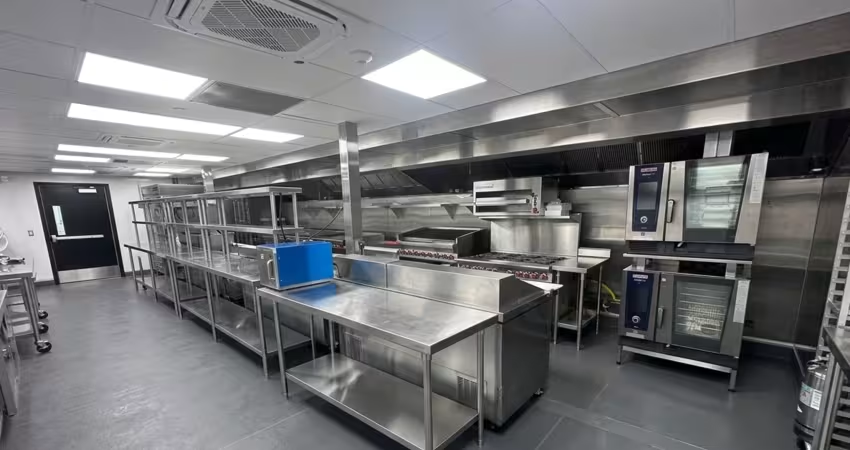
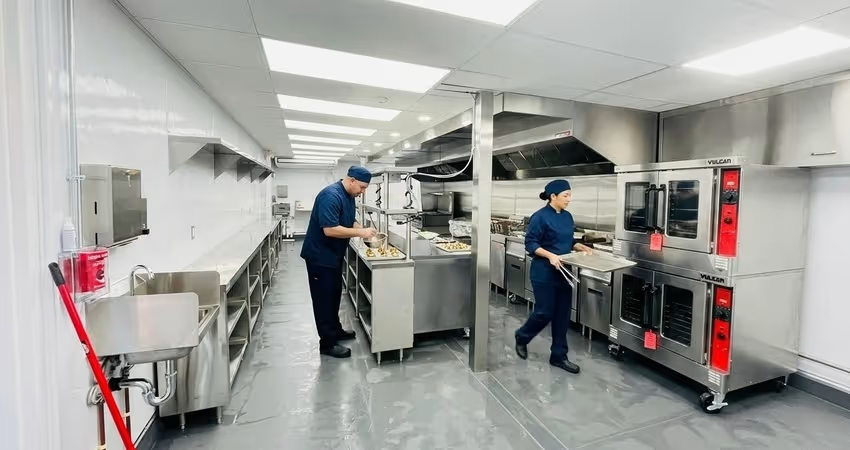
Factory manufacturing removes those variables. Substrates are prepared to spec, floor materials laid down under monitored temperature and humidity, coving turned integral with the field, and wall panel joinery closed to manufacturing tolerances rather than field tolerances.
Modular Culinaire prefabricated senior living kitchens ship with a standard surface package built against the three-pillar framework:
- Flooring: Institutional-grade welded sheet vinyl with integral silver-ion antimicrobial, heat-welded seams, and integral coved base turned up 4–6 inches at all wall junctions
- Wall panels: Class A fire-rated FRP with integral antimicrobial in food-prep and warewash zones; Type 304 stainless cladding at cook lines, dish tables, and pot sinks
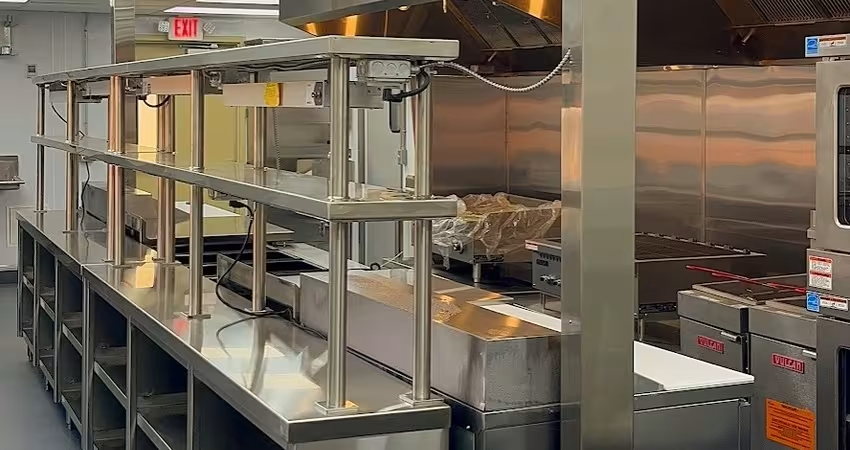
- Work surfaces: Type 304 stainless with welded seams and integral coved splashes; Type 316 stainless in prolonged chloride-exposure zones
- Ceilings: Washable acoustic tiles rated for foodservice humidity and cleaning chemistry
Each component is installed under factory conditions before the module reaches the site. For operators replacing an aging senior living kitchen rather than building new, the approach also compresses the on-site window and protects dining continuity.
Specify the Surface Before the Layout
Kitchen design conversations typically focus on layout, equipment, and ventilation. Surface specification is often deferred to the GC or flooring subcontractor — which is why so many senior living kitchens hit early failures. The surface spec is a design input, not a construction decision, and should be locked before the equipment plan is finalized.
Modular Culinaire's engineering team reviews surface specifications against the three-pillar framework as part of the standard design consultation for prefabricated senior living kitchens. If you're planning a new build or replacement, schedule a consultation to review the spec before the design freezes.
People Also Ask (FAQ)
What flooring is required for commercial kitchens in senior living facilities?
There is no single required material, but the floor must meet FDA Food Code requirements for smoothness, durability, and cleanability; OSHA slip-resistance obligations under 1910.22; and the facility's infection control program. Most senior living operators specify urethane cement with silica broadcast or welded sheet vinyl with integral antimicrobial, with integral poured coving at all floor-to-wall junctions.
Is antimicrobial flooring worth the cost in a commercial kitchen?
In a senior living dietary environment, yes. The kitchen sits inside the facility's infection control program under CMS F-tag 880, and the pathogens of concern — MRSA, C. difficile, VRE, norovirus — persist on environmental surfaces for hours to months. Integral antimicrobial materials continue to perform as the surface wears; topical coatings do not.
How often does a commercial kitchen floor need replacement?
Service life depends heavily on the system installed. Standard commercial epoxy typically fails within 5 to 8 years in a senior living kitchen. Chemical-resistant epoxy with quartz broadcast performs for 12 to 15 years. Urethane cement with silica broadcast delivers 20+ years. Quarry tile can last 25+ years, but the epoxy grout requires re-sealing every 5 to 7 years to maintain infection control performance.

%2520(1)%2520(1)%2520(1).jpeg)
Tell us about your kitchen needs and request a quote.

Turnkey prefabricated kitchen
Proudly made in-house in the USA
Commercial grade kitchen equipment
Code-compliant
Trusted by Industry Leaders



