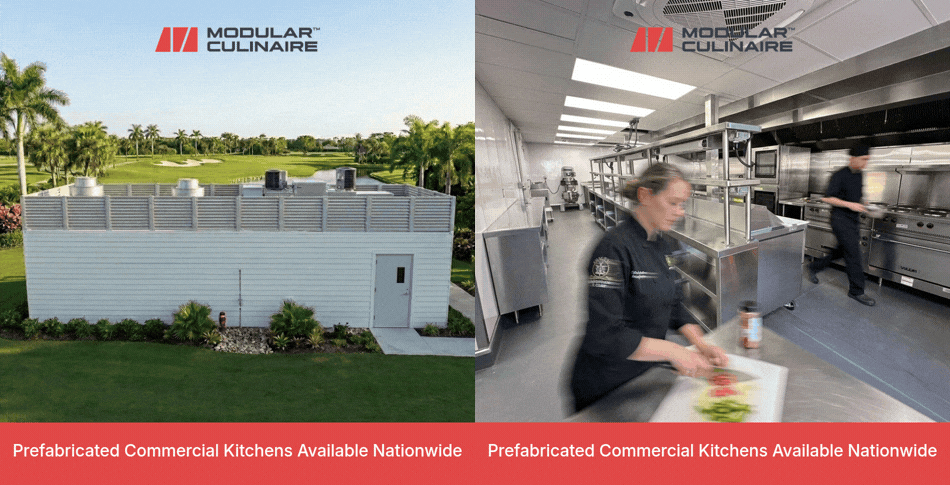
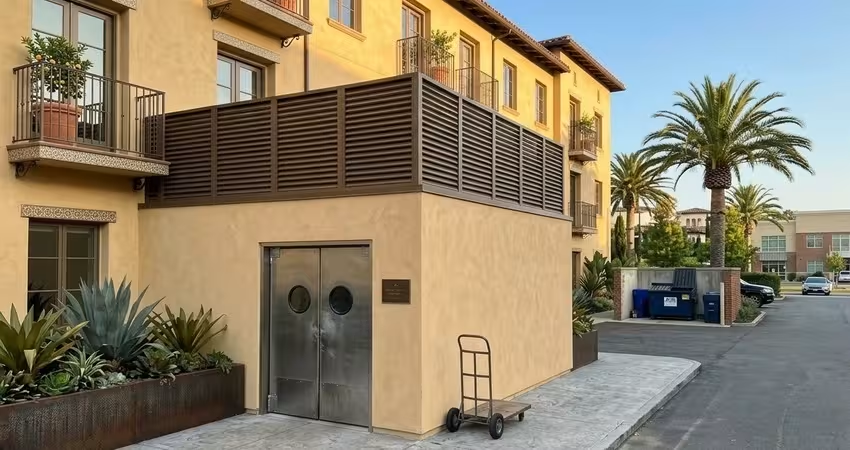
The general contractor's number comes back over budget, and before the meeting ends, someone asks whether the kitchen scope can come down. On paper, it almost always can: the kitchen is one of the most expensive, trade-dense rooms in a hotel or resort, which makes it the first place kitchen value engineering looks. What that costs beyond the line item, and how to keep it off that list before the foodservice consultant writes the spec, is what this piece covers.
Why the Kitchen Is First on the List
The kitchen concentrates more cost per square foot than almost any other room in a hotel or resort, because it stacks equipment, MEP, and finish work into a small, code-heavy footprint. That density is what makes it the first place a tightening budget looks for savings.
A ballroom or guest corridor is mostly finishes. A commercial kitchen layers plumbing, electrical, ventilation, and specialized equipment into every square foot, and nearly all of it clears health-department and fire-code review before it opens. Hospitality projects already carry some of the widest construction-cost ranges of any building type, per Construction Executive's August 2026 analysis of the Beck Group's cost report, and the kitchen is where that range concentrates hardest.
That combination, high cost concentration plus code exposure, is why a value-engineering conversation rarely skips the kitchen. The architect ends up managing a line item they didn't design, can't trim without a foodservice consultant's sign-off, and may not see every hidden cost driving it up.
Note: 90% of commercial kitchen construction projects experience a budget overrun, a brand-standing figure cited for context on how common this pressure is, not as a claim about any one project.
Where the Money Actually Goes
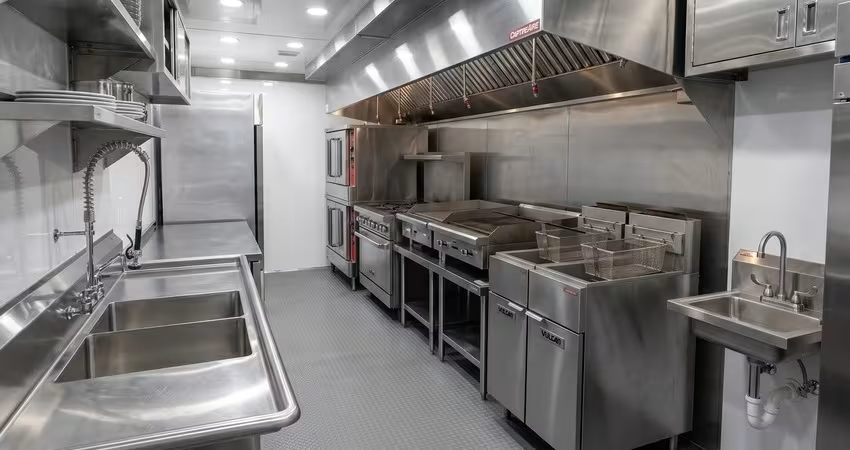
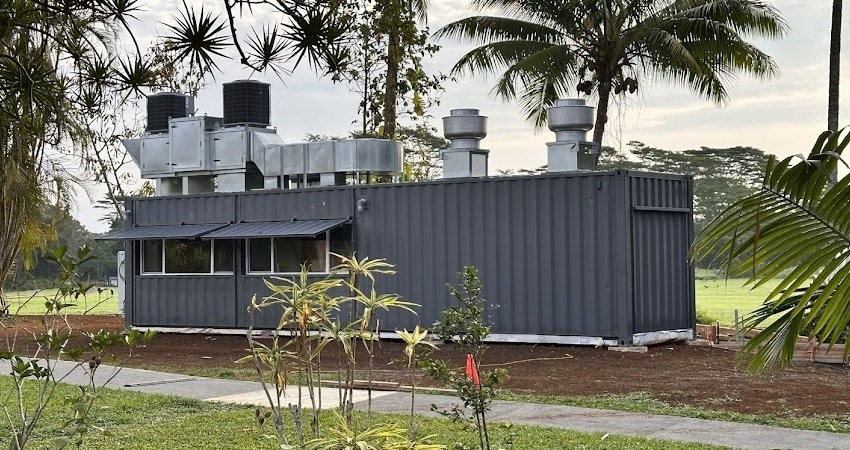
A site-built kitchen spends money on sequence: trades waiting on each other, general conditions piling up each extra week on site, and change orders when design and field don't match. A factory-built kitchen moves most of that spend into a controlled manufacturing environment, changing where the cost volatility sits rather than promising a lower number.
Most architects haven't been shown this, because they've only priced a kitchen one way: site-built, trade by trade. Manufacturing it off-site doesn't remove cost; it removes the parts hardest to predict on a schedule.

At worst, it prices about the same as traditional construction; at best, it saves up to 20%. Modular Culinaire's completed projects have saved up to 20% against traditional construction, though that number moves with site conditions and scope. Most importantly, it saves time, up to 50% faster to deploy, because manufacturing runs in parallel with site work instead of waiting on it.
Tip: If value engineering is already underway, ask where the current estimate's contingency sits. A traditionally sequenced kitchen usually carries a bigger contingency line, because so much of its cost depends on things that can't be fixed until the trades are already on site.
What Kitchen Value Engineering Actually Costs You
When the kitchen becomes the value-engineering target, the fallout rarely stays contained to the kitchen. It shows up as scope cuts elsewhere, a contingency line eaten before the trades even start, or a client relationship strained by a number the architect never controlled.
None of that is abstract for the person holding the client relationship. A board or resort owner doesn't separate a kitchen overrun from a project overrun; they remember who signed the drawings. Foodservice Equipment & Supplies has long framed late value engineering as a fight over price versus design integrity, not a planned part of the budget.
- Scope gets cut elsewhere on the project to protect the kitchen number.
- The contingency line absorbs the overage before construction reaches the kitchen.
- The client remembers the number, not the decisions behind it.
The Market Signal Architects Can't Ignore
Billings at U.S. architecture firms have sat below the growth threshold for roughly three and a half years, and the gap between inquiries and signed contracts is widening: clients are still interested, but fewer of those conversations convert into funded work.
The AIA/Deltek Architecture Billings Index came in at 47.2 in August 2026, up only slightly from 46.6 in July, according to the AIA's own release; any score below 50 signals declining billings. Architect Magazine's coverage of the July number framed the real story: inquiries held positive while design contracts kept falling, which the magazine read as projects struggling to cross from consideration into commission.
For a project sitting in that gap, between "interested" and "signed," a kitchen budget that removes its own cost volatility is a genuine lever for getting it over the threshold. That's a different argument from "it's cheaper." It's about which projects make it to construction in a soft market.
The Objection: "If It's Cheaper, What's the Catch?"
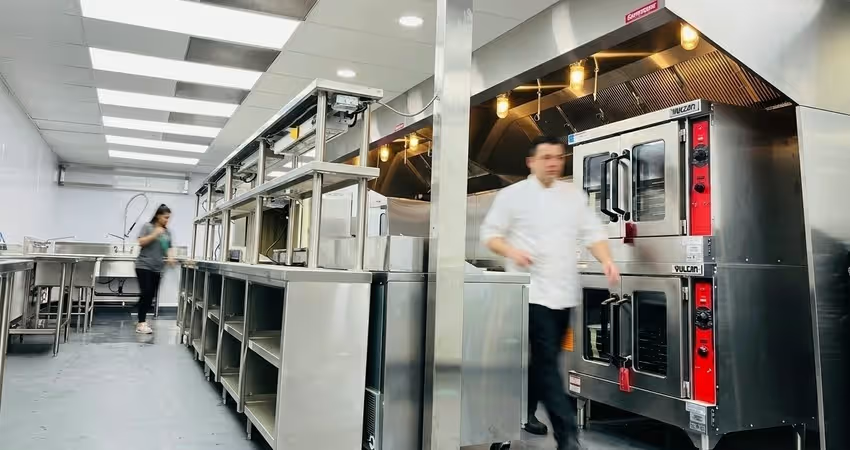
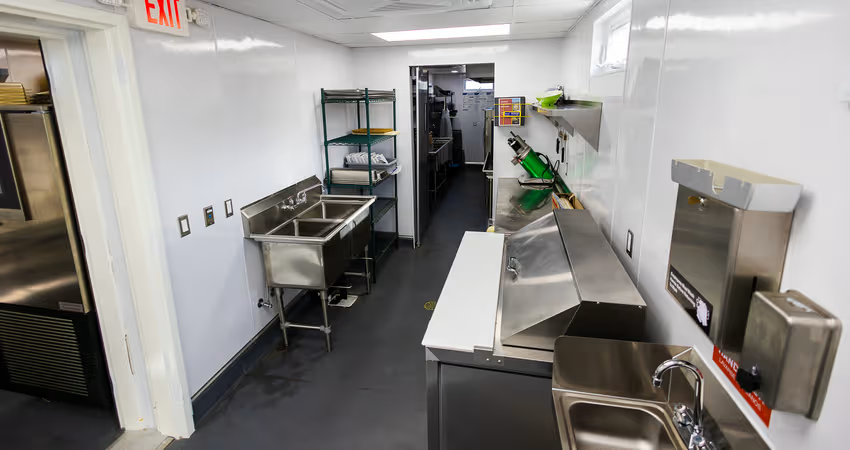
There is no catch on quality. A factory-built kitchen holds the same code compliance, the same finish flexibility, and the same permanence as a site-built one. What changes is where the labor happens and how predictable the cost is, not what the client ends up with.
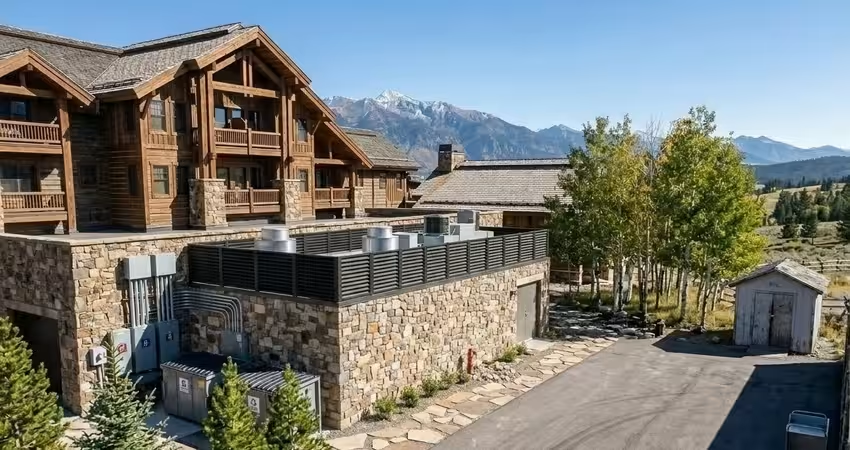
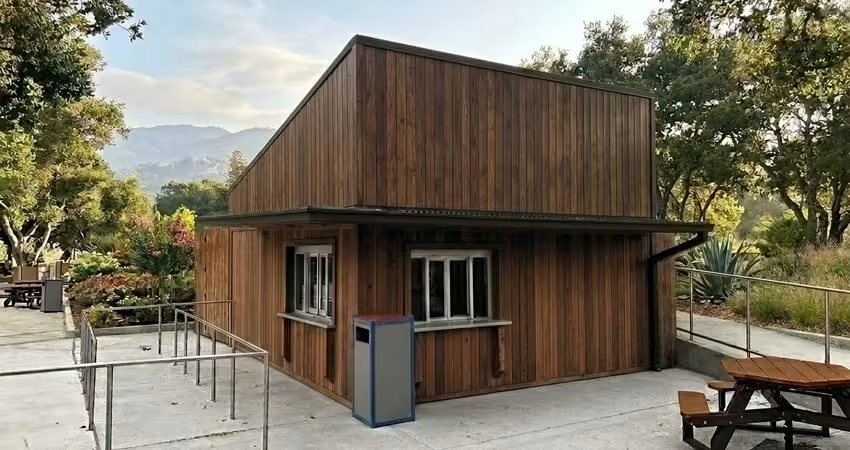
This objection usually comes from the same place as the first education gap: most architects have never specified a permanent kitchen built this way, so "prefab" reads as a downgrade. It isn't. A factory-built commercial kitchen is still a permanent, code-compliant building element, stamped, third-party inspected, and finished to match the architectural set, standalone or attached. The only thing that's different is the sequencing of where and when the labor happens.
Bringing This In Before It's Too Late
The timing matters more than the argument itself. Once a foodservice consultant has drafted the Division 11 specification around conventional, site-built construction, a factory-built kitchen stops being an option and starts being a change order to someone else's finished work. The window that matters is programming and basis-of-design, before that specification exists, which is also the window covered in specifying a factory-built kitchen in your drawing set.
Bring us in before the kitchen gets value-engineered. That means including a factory-built kitchen in the basis-of-design at programming stage, and introducing the foodservice consultant on the project early enough that the Division 11 spec can be written around it rather than against it. Modular Culinaire can hand over CSI-format Division 11 specification language and Revit families at that stage, so the option fits the consultant's own deliverable instead of asking them to depart from it. Reach out before that spec is written.
Disclaimer
Billings and construction-cost figures here are national, dated snapshots that will have moved by the time you read this; confirm current values with the AIA before citing them to a client. Code and permit references are general; verify equipment and building-code requirements with the authority having jurisdiction for your project.
People Also Ask (FAQ)
What is value engineering in commercial kitchen construction?
Value engineering is the process of reviewing a project's design and specifications to find ways to reduce cost without abandoning the project's core goals. In a hospitality kitchen, it typically targets equipment specs, finishes, or construction sequencing, since the kitchen concentrates more cost per square foot than most other rooms in the building.
Why is the kitchen usually the first thing cut when a hospitality budget tightens?
The kitchen combines dense equipment, MEP, and code-driven requirements into a small footprint, which makes its line-item cost stand out against the rest of the project. That visibility, not any flaw in the design, is what puts it first on a value-engineering list when budgets get tight.
Does a factory-built kitchen cost less than a site-built one?
At worst, it prices about the same as a comparable site-built kitchen. At best, Modular Culinaire's completed projects have saved up to 20% against traditional construction. Most importantly, it saves time, and that's what indirectly protects the budget: manufacturing runs in parallel with site work, which removes most of the standby costs and change orders a sequential schedule accumulates.
When should an architect bring a factory-built kitchen into a hospitality project?
At programming and basis-of-design, before the foodservice consultant has written the Division 11 equipment specification around conventional construction. After that point, a factory-built kitchen is a change to an existing specification rather than an option the consultant is already working from.
Tell us about your kitchen needs and request a quote.

Turnkey prefabricated kitchen
Proudly made in-house in the USA
Commercial grade kitchen equipment
Code-compliant
Trusted by Industry Leaders



