Change orders account for 8–14% of total contract value on commercial construction projects, according to Navigant research published by the AIA. On commercial kitchen builds — where MEP systems, ventilation, fire suppression, and health-department compliance all intersect — that figure climbs higher.
For any operator overseeing a kitchen construction project, each unplanned change order erodes the budget you committed to, delays the timeline you promised, and raises questions you'd rather not answer. This article covers why kitchen builds attract change orders, seven steps to minimize them, and one approach that eliminates most before they start.
What Change Orders Actually Cost You
A change order is a formal amendment to the original construction contract that modifies scope, cost, or timeline after work has begun. On kitchen projects, where budgets typically run $250–$500 per square foot, even a modest change order triggers costs well beyond the line-item price of the changed work itself.
The Direct Price Tag
Every change order carries premium pricing. Contractors bill changed work at higher rates than original-scope work because it disrupts sequenced labor, requires re-procurement, and often involves overtime. According to Arcadis's 2025 Global Construction Disputes Report, contested change orders are among the most common triggers for construction disputes — which average $60.1 million in value and 12.5 months to resolve in the U.S.
The Hidden Multipliers
The direct price is only the beginning. Change orders multiply costs through:
- Schedule delay: A single ventilation reroute can push electrical and plumbing work back by weeks.
- Carrying costs: Each month of delay adds $5,000–$15,000+ in rent or lease payments on non-revenue-generating space.
- Ripple effects: Shifting a prep station three feet cascades into electrical rerouting, plumbing changes, and ventilation adjustments — each billed at change-order rates.
- Rework: The Construction Industry Institute estimates rework at 2–20% of total project cost, with change orders among the primary contributors.
Why Commercial Kitchen Projects Are Change Order Magnets
Kitchen construction is more complex than a standard commercial buildout. The density of regulated systems per square foot — ventilation, gas, electrical, plumbing, fire suppression, refrigeration — creates more interdependencies and more opportunities for scope changes to cascade into change orders.
MEP Complexity and Trade Coordination
A commercial kitchen requires coordination of more specialized trades than almost any other buildout. Exhaust hoods, make-up air units, grease traps, floor drains, dedicated circuits, gas lines, and fire-suppression systems all occupy the same footprint. When one trade's work is misaligned with the documents, a change order follows.
Note: KPMG research found that up to 80% of construction projects experience cost overruns, with change orders accounting for 7–15% of total costs. Kitchen builds sit at the high end of that range.
Equipment Specification Changes Mid-Build
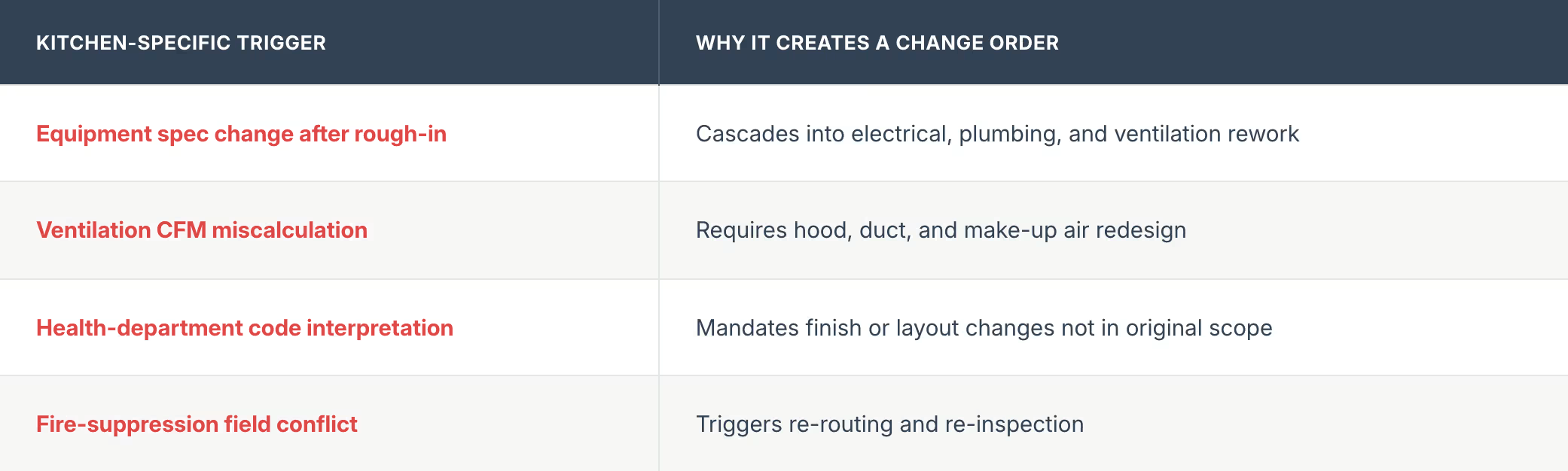
When an operator changes equipment models after MEP rough-ins are complete, the consequences cascade: different voltage requirements, different drain locations, different ventilation CFM calculations. What looks like a simple swap becomes a multi-trade change order.
Regulatory and Code Surprises
Commercial kitchens face inspections from multiple authorities having jurisdiction (AHJs): the building department, fire marshal, and health department. A code interpretation that differs from what the design team assumed — a fire-suppression requirement the drawings missed, a health-department standard requiring a different finish material — creates a change order nobody budgeted for.
Tip: Schedule a pre-construction meeting with every AHJ that will inspect the project. Issues raised in a 30-minute meeting cost nothing to resolve. The same issues discovered during an inspection can cost weeks and tens of thousands of dollars.

How to Minimize Change Orders Before Construction Starts
Most change orders are preventable, and the highest-leverage window is before construction begins. For an operator accountable for delivering a capital project on time and on budget, these four pre-construction steps protect both the budget and your credibility with stakeholders.
Step 1: Finalize Equipment Specifications Before Design
Treat equipment selection as a design input, not a design output. Finalize your equipment schedule — voltage, BTU ratings, water consumption, drain requirements, exhaust CFM — before construction drawings are issued.
Tip: Align your exhaust hood contractor and equipment supplier from day one so CFM calculations reflect your actual cooking battery, not placeholder assumptions.
Step 2: Complete a Pre-Construction AHJ Meeting
Meet with the building department, fire marshal, and health department before breaking ground. Confirm which codes apply and where local interpretations differ from what the design team expects.
Step 3: Lock Scope with a Detailed Design-Review Process
Require all stakeholders — operator, architect, GC, and kitchen designer — to sign off on final construction documents before work begins. A formal scope-lock reduces the ambiguity that creates change orders downstream.
Step 4: Build a Realistic Contingency
Allocate 15–20% of total budget for unforeseen conditions and cost escalations. A contingency is not a budget failure — it's the discipline that prevents a single change order from derailing the project.
How to Manage Change Orders During Construction
Even with strong pre-construction planning, some change orders are unavoidable. How they're managed determines whether they stay contained or compound.
Step 5: Require Written Approval Before Any Work Begins
No verbal approvals. Every change order should be documented in writing — scope change described, cost impact quantified, schedule impact stated — before any work proceeds. This protects the budget and creates an audit trail.
Step 6: Track Cumulative Impact, Not Just Individual Orders
A $5,000 change order looks manageable in isolation. Ten of them are a $50,000 overrun. Maintain a running log that tracks cumulative change-order cost against your original contract value and contingency.
Note: Research published by the AIA shows projects with weak scope documentation see change-order costs climb past 25% of contract value.
Step 7: Hold Weekly Cost-Reconciliation Meetings
Meet weekly with your GC to review the change-order log, update projected final cost, and flag emerging patterns. Weekly visibility prevents the "surprise at closeout" that erodes trust in leadership.
The Structural Alternative: Eliminating Change Orders at the Source
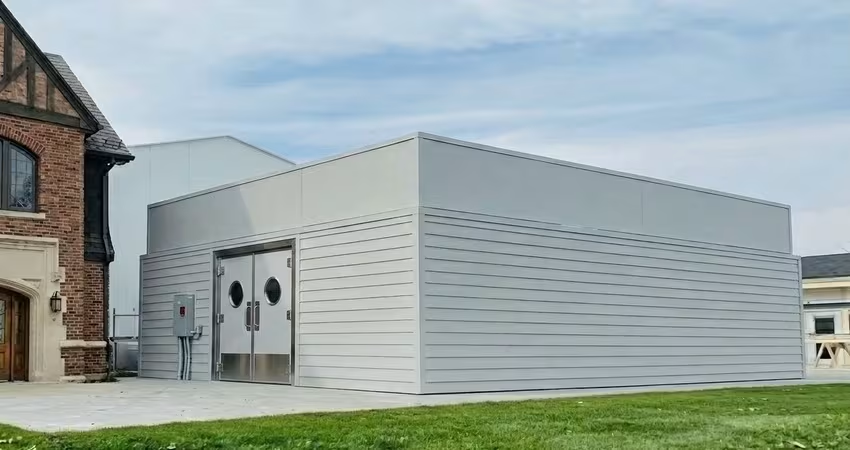
The steps above minimize change orders within traditional construction. But there's a fundamentally different approach: building the kitchen off-site in a controlled factory environment rather than assembling it on-site from dozens of independently coordinated trades.
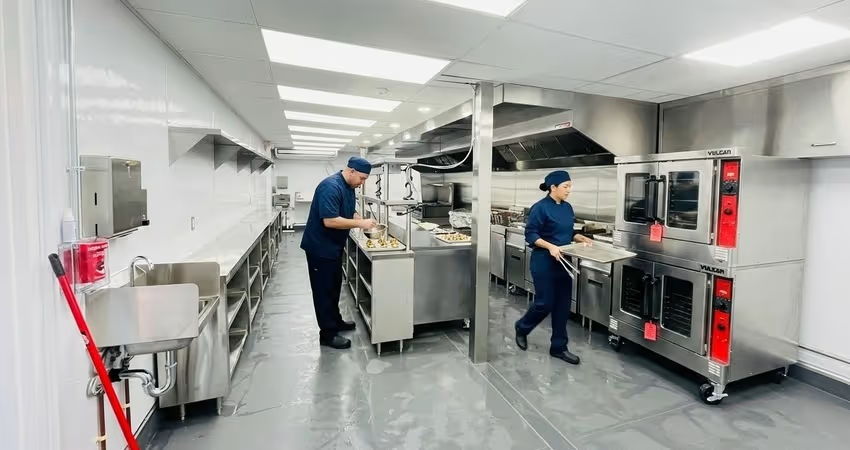
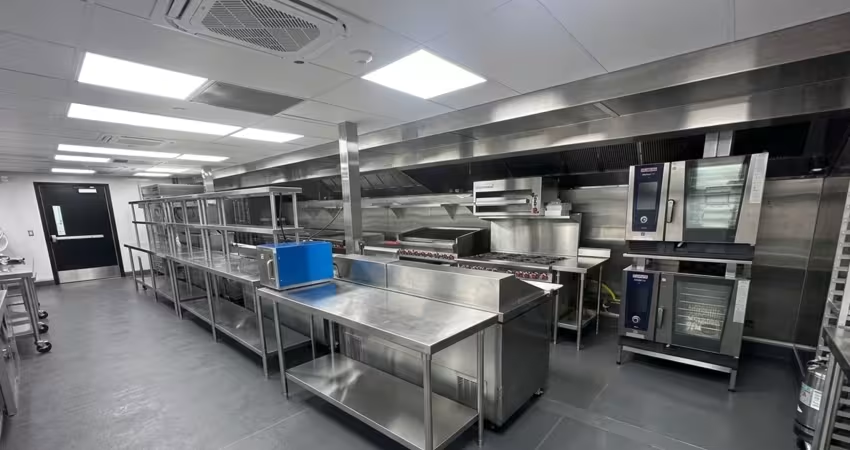
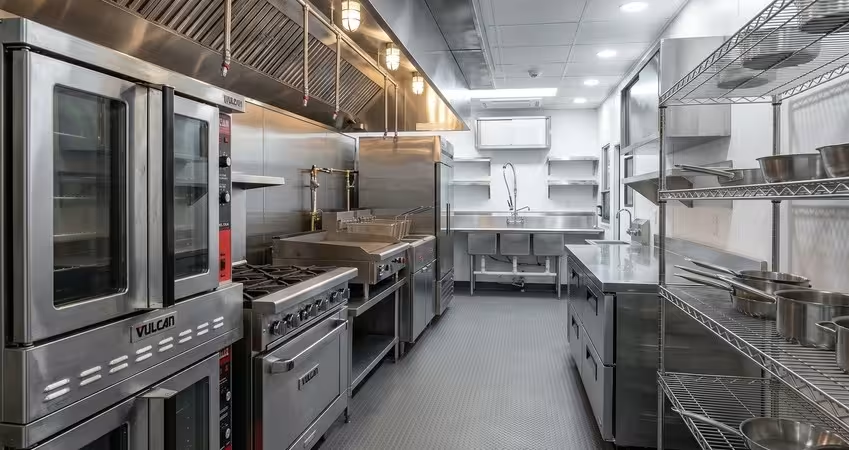
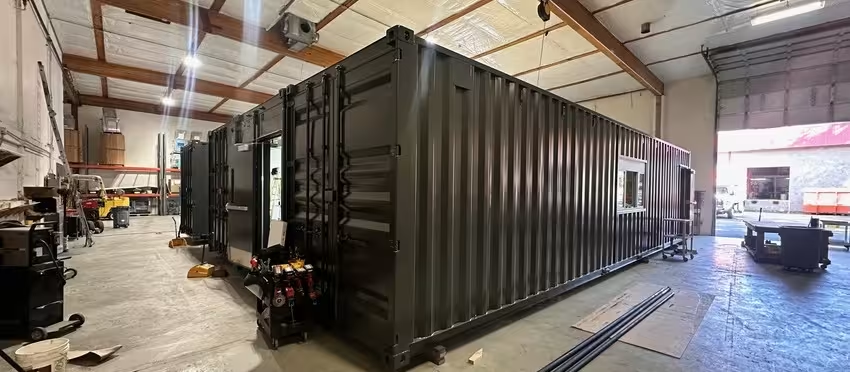
A prefabricated modular kitchen arrives with equipment, HVAC, plumbing, electrical, and fire suppression pre-installed and inspected in a single unit. Because every system is engineered and assembled in a factory, the trade-coordination failures and mid-build changes that generate change orders don't occur.
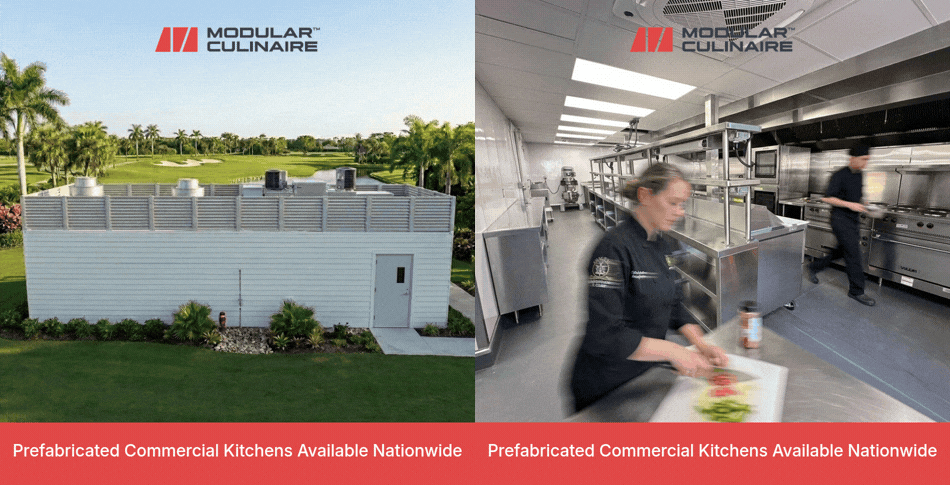
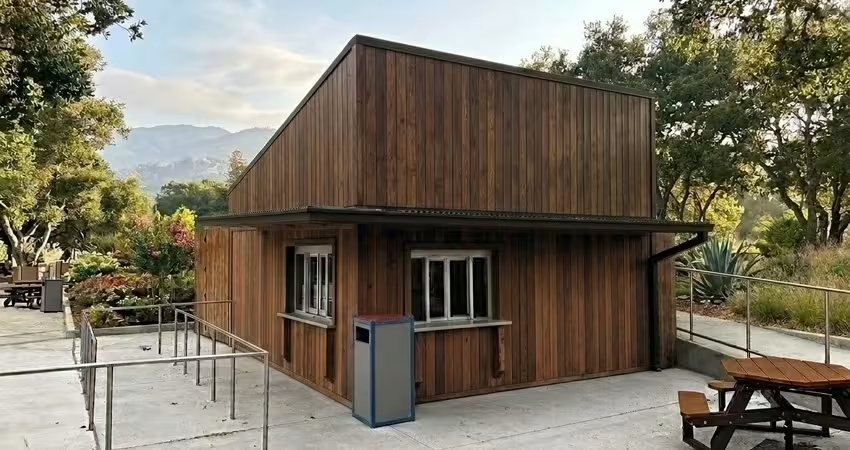
Modular Culinaire builds permanent, code-compliant prefabricated commercial kitchens that arrive 95% finished. Apogee Golf received a 1,280-square-foot kitchen — production to installation in seven weeks, roughly 20% less than traditional construction, fixed pricing, no change orders. Boyne Resorts deployed a 640-square-foot kitchen manufactured in 12 weeks, saving approximately 30% versus a conventional build.
For an operator who needs a kitchen that opens on time and on budget — without the governance exposure change orders create — evaluating a prefabricated kitchen is worth doing before committing to a traditional build.
Conclusion
Change orders in commercial kitchen construction are not random — they follow predictable patterns rooted in MEP complexity, late equipment decisions, and multi-agency code requirements. That predictability is the opportunity. Finalize equipment specs before design, lock scope with every stakeholder in the room, require written approval for every change, and track cumulative impact weekly.
Those seven steps won't eliminate every change order, but they'll contain the ones that erode budgets, delay openings, and put your credibility on the line. And if you want to eliminate the structural causes altogether, a fixed-price, factory-built prefabricated kitchen removes the variables that create change orders in the first place — so you're not the one explaining an overrun to your board.
Disclaimer
This article is for educational purposes and does not constitute financial, legal, or construction advice. Building codes, permitting requirements, and cost figures vary by jurisdiction. Consult qualified professionals — including a licensed architect, general contractor, and local AHJs — before making construction decisions.
People Also Ask (FAQ)
What is a change order in construction?
A formal written amendment to a construction contract that modifies scope, cost, or timeline after the original agreement is signed. In kitchen construction, they most commonly result from equipment specification changes, code-compliance surprises, or unforeseen field conditions.
How much do change orders typically add to a commercial kitchen project?
On average, 8–14% of original contract value across commercial projects. Kitchen projects sit at the higher end due to MEP density. On a $500,000 project, that's $40,000–$70,000+ in unplanned costs.
Why do kitchen builds have more change orders than other construction projects?
Kitchens concentrate more regulated, interdependent systems per square foot than almost any other buildout. A change in any one system — ventilation, electrical, plumbing, fire suppression — cascades into the others.
Can you eliminate change orders on a kitchen build?
Not in traditional construction. But off-site manufacturing structurally eliminates the primary triggers. A factory-built prefabricated kitchen integrates all systems before delivery — fixed pricing, no change orders.

%2520(1).jpeg)
Tell us about your kitchen needs and request a quote.

Turnkey prefabricated kitchen
Proudly made in-house in the USA
Commercial grade kitchen equipment
Code-compliant
Trusted by Industry Leaders



