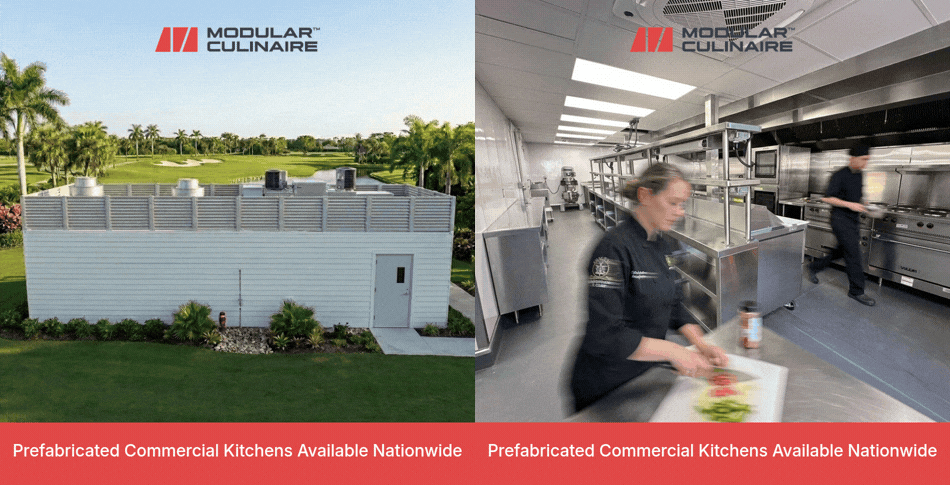
Most Directors of Nutrition and Culinary Services hear "we're replacing the kitchen" and brace for the same thing: a year or more of construction, a kitchen that's partly or fully unusable, and months of improvising meal service around it. That's what traditional construction requires. It's not what a modular replacement or expansion requires. The new kitchen is built in a factory while your current one keeps running, untouched, until it's time to swap in. Here's why the 18-month assumption exists, what actually changes on your end, and what it protects for the dining program specifically.
Why "Replacing the Kitchen" Sounds Like 18 Months of Disruption
Traditional construction builds the new kitchen where the old one stands, which means the old one has to come out first. That sequencing, demolition, then build, then move-in, is where the 12-to-18-month timeline and the service gap both come from.
More than 2 in 5 senior housing units nationwide are now over 25 years old, which is why this timeline keeps landing on so many capital plans. For a fuller look at why that replacement wave is happening now, see our complete guide to modular kitchens for senior living.
Note: The shutdown isn't a side effect of construction; it's structural. You can't operate a kitchen that's actively being demolished and rebuilt in the same footprint, which is why traditional projects plan around a dark-kitchen period in the first place.

The Difference: Your Kitchen Never Actually Stops Running
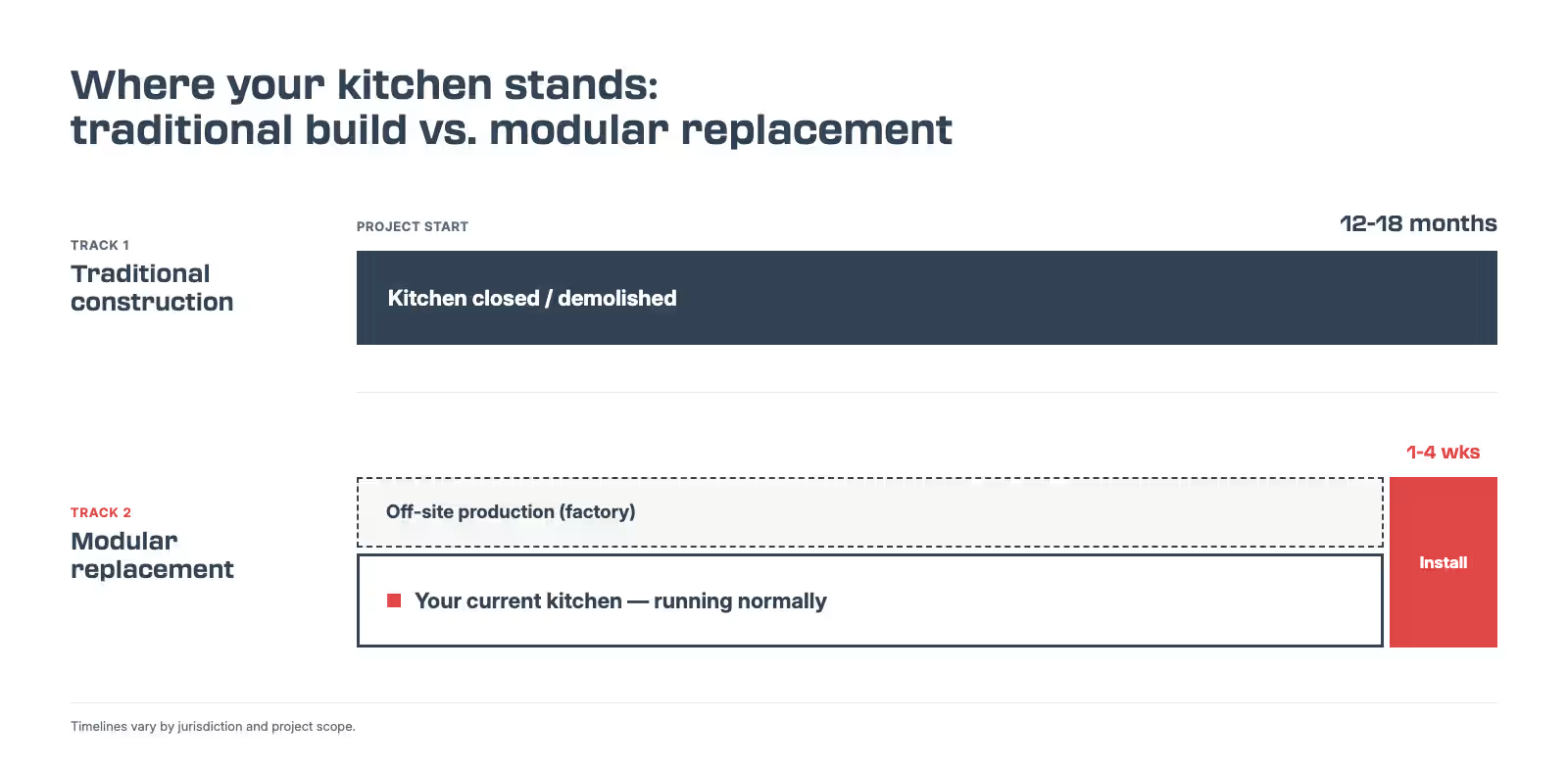
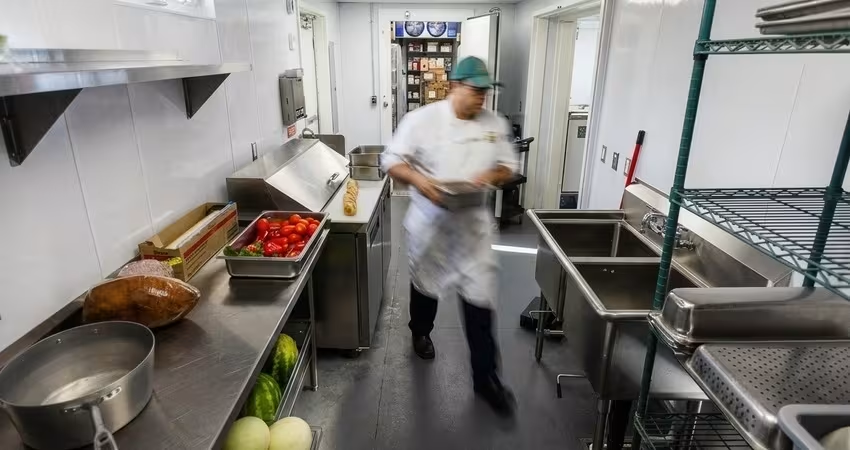
A modular replacement is built off-site, in a factory, while your current kitchen keeps operating exactly as it does today. There's no demolition phase for your team to work around, because nothing on your side changes until the new kitchen arrives finished and ready to connect.
That's the whole mechanism, and it's why the timeline compresses the way it does. For how the delivery and swap-in actually work on site, including site prep and utility tie-in, see our full modular-vs-traditional breakdown. For this role, the relevant part is simpler: there's no interim kitchen to manage, no phased handover to coordinate, and no stretch of weeks where the team is making do with half a kitchen. You run food service normally until installation day.
What This Actually Protects, If You're the One Running Dining
A Facilities leader experiences a long kitchen project as a budget and coordination risk. Nutrition and Culinary Services experiences it as a direct hit to the metric this role is measured on: dining satisfaction, now one of the fastest-moving scores families weigh when they rate a community.
The 2025 J.D. Power U.S. Senior Living Satisfaction Study found family satisfaction with dining rose 11 points year over year, outpacing nearly every other factor measured. A project that never interrupts your kitchen protects that score instead of putting it at risk for a year and a half.
It also protects a compliance obligation this role carries continuously. 42 CFR 483.60 requires a member of food and nutrition services staff on the interdisciplinary care-planning team at all times, project or no project. A kitchen that keeps running means that requirement never has to be met under degraded conditions.
Tip: Ask any modular manufacturer for their permit-approval record before committing to a timeline. Modular Culinaire's 100% building-permit approval record across 400-plus delivered kitchens is a different risk profile than a first-time local build.
The Myth vs. the Reality
.avif)
The Takeaway
An 18-month, dark-kitchen disruption is the default assumption for replacing or expanding a kitchen, not a requirement. The real question for Nutrition and Culinary Services isn't whether the kitchen gets replaced; it's whether the project ever actually interrupts the service your community is already being measured on. Built off-site, it doesn't have to.
If a kitchen replacement or expansion is on your community's horizon in the next 24 months, talk to the Modular Culinaire team about what the timeline looks like for your kitchen.
Disclaimer
Permitting timelines, food-sanitation inspection standards, and long-term care licensing requirements vary by state and jurisdiction. Confirm specifics with your state health department and the authority having jurisdiction before finalizing a project timeline.
People Also Ask (FAQ)
Does a kitchen have to close while a modular replacement is built?
No. The new kitchen is manufactured off-site, in a factory, while the current one keeps operating exactly as normal on site. The only on-site work is final delivery, utility connection, and installation, which generally takes one to four weeks rather than the many months a traditional, on-site build would require from start to finish.
How long does a modular kitchen replacement take from start to finish?
The full project, from initial design through installation, generally spans several months rather than the 12 to 18 months typical of ground-up construction, with the exact permitting timeline varying by jurisdiction. Most of that time happens in the factory, in parallel with design and permitting, while the current kitchen stays fully in service the whole time.
Can a senior living community replace its kitchen without disrupting resident meal service?
Yes. Because the new kitchen is built off-site in a factory, resident meal service continues normally on the existing kitchen, breakfast through dinner, right up until the new one is ready to install, avoiding the extended disruption that a traditional, on-site rebuild typically causes for both residents and dining staff.
Tell us about your kitchen needs and request a quote.

Turnkey prefabricated kitchen
Proudly made in-house in the USA
Commercial grade kitchen equipment
Code-compliant
Trusted by Industry Leaders



