
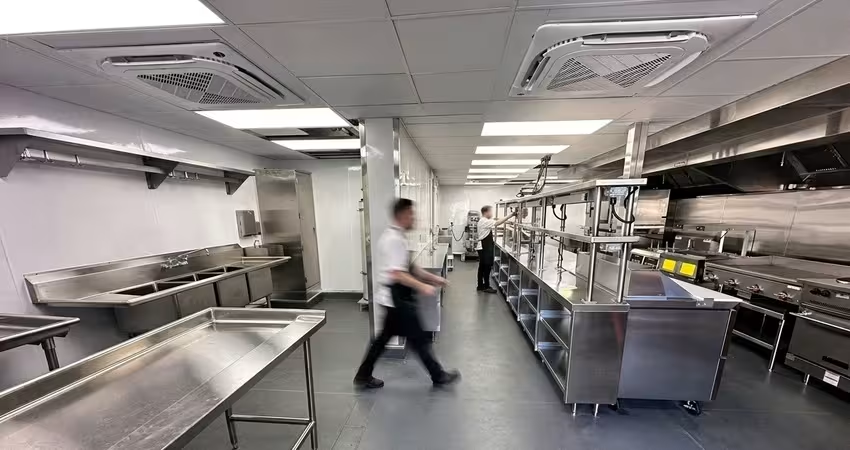
You've seen the blue NSF mark on every piece of equipment quoted for your kitchen build — refrigerators, prep tables, dish machines. What most vendor spec sheets don't say is that NSF ANSI standards for commercial kitchen equipment aren't one certification. They're a family of roughly 20 separate standards, each covering a different equipment category, plus a distinct set for surfaces rather than machines.
An Executive Chef who signs off on an equipment list assuming "NSF-certified" means the same thing everywhere is the one most likely to catch a failed inspection mid-project — not the general contractor. Here's which standards apply, where jurisdictions diverge, and what to verify before you approve a vendor's spec.
What NSF/ANSI Certification Authorities Actually Cover
NSF/ANSI standards are American National Standards developed by NSF International and accredited by the American National Standards Institute (ANSI). Under FDA Food Code Section 4-205.10, equipment certified to a recognized standard by an ANSI-accredited certification program is deemed to meet the Food Code's equipment sanitation requirements — which is why health departments treat the mark as shorthand for "already vetted."
Who Sets These Standards
NSF International has facilitated more than 75 standards and protocols for sanitary food equipment, according to NSF. Roughly 20 are the NSF/ANSI series that shows up on a kitchen job — separate standards for cooking equipment, refrigeration, warewashing, and materials. The FDA's list of recognized American National Standards for food equipment confirms which ones the Conference for Food Protection formally tied to Food Code compliance — the reference your health department works from, even if they never say "NSF/ANSI" out loud.
Why "NSF-Certified" Isn't One Claim
Note: "NSF-certified" on a spec sheet isn't a single claim. Ask which standard number the certification is against — a range hood certified to NSF/ANSI 2 says nothing about whether the walk-in cooler on the same order meets NSF/ANSI 7.

The NSF/ANSI Standards That Apply to Your Kitchen Equipment
Executive Chefs specifying or approving equipment for a kitchen build need to track roughly six standard families, not one blanket certification — and each governs a distinct category of equipment your vendor list will include.
The Six Standards That Show Up on Most Kitchen Builds
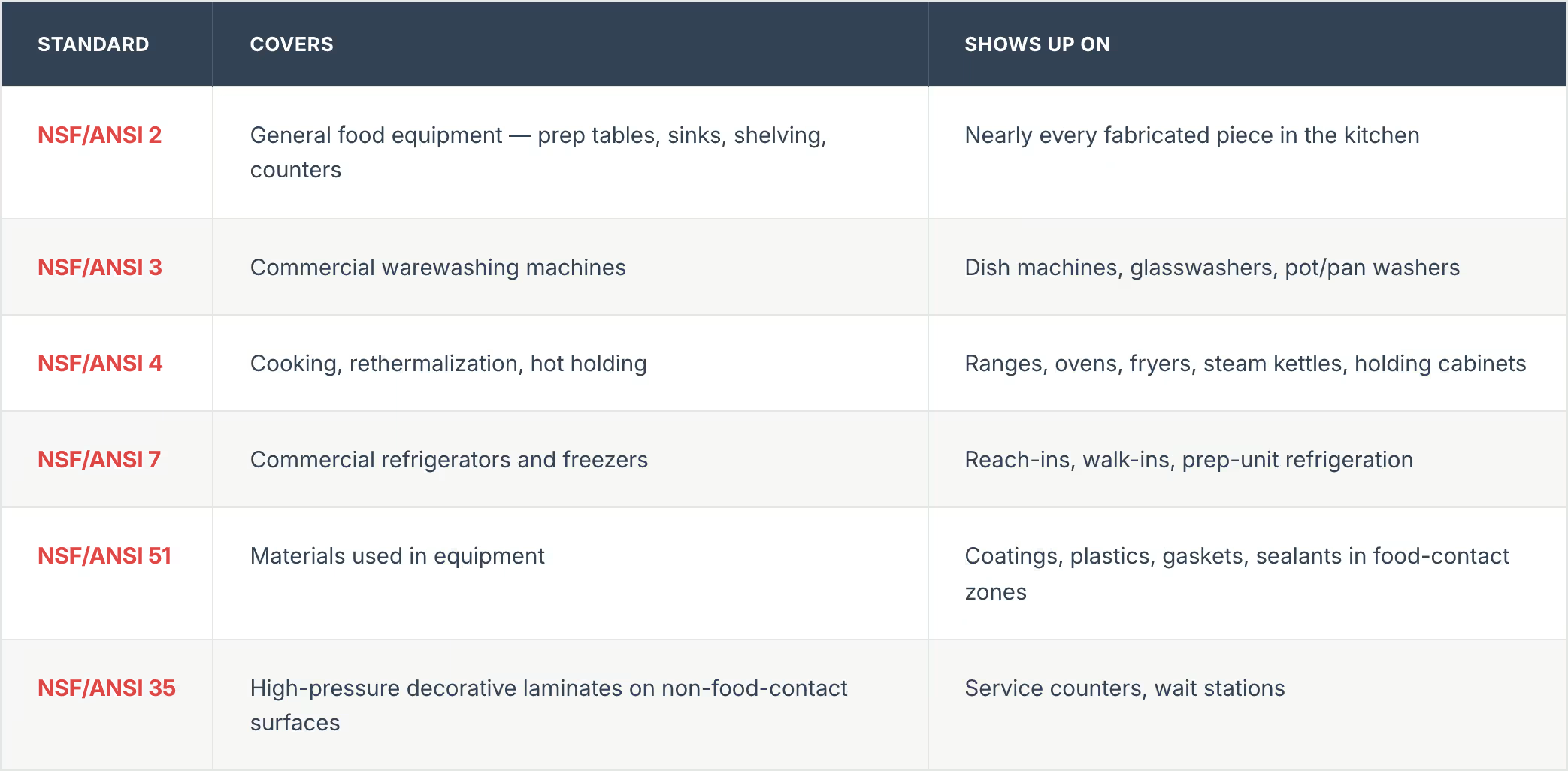
Each standard sets its own requirements for materials, design, construction, and performance, so a vendor's "NSF-certified" label on a fryer tells you nothing about whether their walk-in cooler or their laminate countertop is certified to the standard that actually applies to it.
Equipment vs. Surfaces: Two Separate Compliance Questions
Equipment certification and surface certification answer different questions, and a chef reviewing a submittal package needs to check both. Equipment standards (NSF/ANSI 2, 3, 4, 7) govern manufactured units. Surface standards govern the built environment around them — countertops, floors, and non-food-contact laminate.
What Counts as a Surface, Not Equipment
A stone or solid-surface countertop isn't automatically covered by an appliance manufacturer's NSF/ANSI 2 listing. According to a stone-fabrication industry guide, NSF/ANSI 2 governs surface materials wherever food is prepared, and health inspectors apply it broadly to edge profiles, seam treatment, and sealing — not just to the appliances sitting on top of the counter. Three things to check on a surface spec that a chef would otherwise assume the GC has covered:
- Edge profiles: Simple eased or bullnose edges pass inspection more easily than ogee or multi-radius profiles, which can trap food particles at the prep counter.
- Seam treatment: Every seam needs a food-grade, NSF-listed epoxy, polished flush — a frequently cited defect on health inspections.
- Sealer certification: Natural stone needs a penetrating sealer certified for food contact; engineered quartz and porcelain typically need none, which simplifies the spec.
Where This Trips Up Chef-Specified Equipment
The gap shows up when equipment orders come from more than one vendor and no single party owns verifying every certification number against the standard it's supposed to meet. On a traditional build, that verification job often lands on whoever is closest to the equipment list — which, per brand knowledge, is frequently the Executive Chef given real, confirmed influence over vendor selection.
Why This Lands on the Chef, Not the GC
That's the same dynamic behind a familiar pain: chefs inheriting a kitchen built by someone who wasn't thinking about workflow, then living with the fix for years before getting buy-in to correct it. Equipment compliance follows the same pattern — a piecemeal spec across multiple trades is where a missing NSF/ANSI 7 certification on a reach-in slips through, and it's the health-inspection score that catches it, not the punch list.
The One-Question Fix
Before you sign off on a vendor's equipment list, ask for the standard number next to each certification claim — "NSF-certified" without a number is the single most common gap a submittal review catches.

How Jurisdictions Apply These Standards Differently
NSF/ANSI standards don't vary by state, but the Food Code edition your local health department has adopted does — and that determines which version of a standard your AHJ recognizes.
The Conference for Food Protection's 2018 recommendation, formalized in FDA's 2019 update to Food Code Section 4-205.10, ties equipment certification to any recognized American National Standard from an ANSI-accredited certifier — but jurisdictions adopt Food Code editions on their own timeline, sometimes years apart.
The Partial-Certification Trap
A restaurant-industry guide to NSF/ANSI 2 flags a detail worth checking on a submittal: certification applies to food zones specifically, not every component — a prep table's tabletop needs it, the legs typically don't. That distinction matters when an inspector is deciding whether a partial certification claim is sufficient.
What to Verify Before You Approve a Vendor's Equipment List
The Four-Point Check
Run every equipment and surface line through the same four checks before signing off:
- The standard number, not just "NSF-certified." Match it to the category — refrigeration to NSF/ANSI 7, cooking equipment to NSF/ANSI 4, surfaces to NSF/ANSI 2 or 35.
- Verification at the source. NSF maintains a public certification database searchable by manufacturer and model — confirm a claim there, a step FoodSafePal's overview of NSF standards recommends for exactly this reason.
- Surface documentation, separately. Sealer certification, seam epoxy specification, and edge-profile drawings belong in the same submittal package as equipment cut sheets.
- One name accountable for the full list. On a multi-vendor build, assign one person — not "the GC" generically — to confirm every certification number before the punch-list walk.
How a Factory-Built Kitchen Changes the Compliance Picture
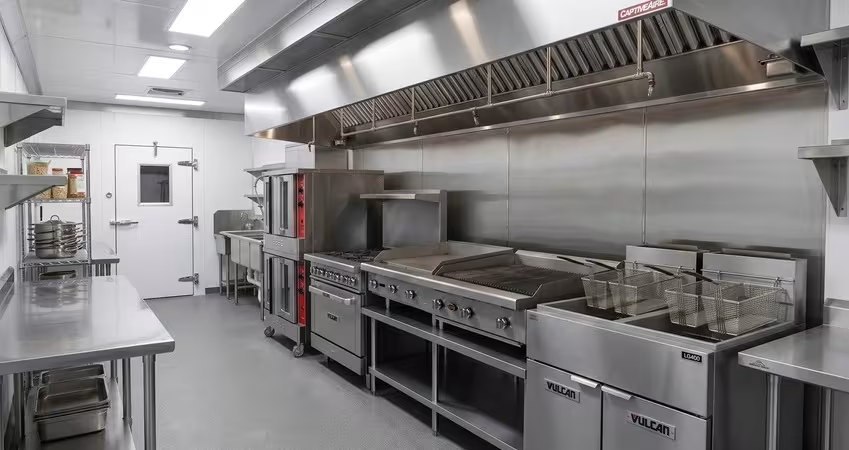
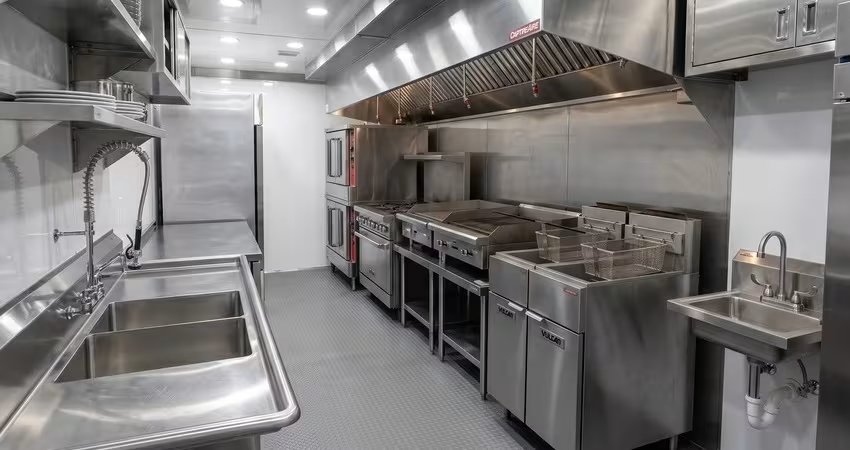
This is where a factory-built kitchen changes the verification problem rather than just the equipment. Modular Culinaire delivers kitchens with commercial-grade equipment and surfaces pre-installed and third-party inspected as a single package before the unit ever leaves the factory — turnkey, code-compliant, with one point of accountability instead of a chef cross-checking certification numbers across a dozen separate vendor invoices.
One Package, One Point of Accountability
That single-package approach is the reframe worth carrying into any vendor conversation: a traditional build assembles equipment and surfaces from whichever suppliers won each line item — exactly the condition that lets a certification gap slip through until an inspector finds it. Modular Culinaire's approval record reflects that difference in practice: a 100% building-permit approval track record across 400+ delivered units.
What Still Needs the Chef's Sign-Off
This doesn't remove the chef's job entirely — site-specific items like custom millwork or owner-supplied smallwares still need the same verification. But it collapses the number of vendors whose certifications need independent checking from dozens down to one.

Conclusion
NSF ANSI standards for commercial kitchen equipment aren't one certification to check once — they're roughly 20 distinct standards spanning equipment and surfaces, and a claim on one line item says nothing about the next. The chef who asks for the standard number behind every "NSF-certified" claim, and checks surfaces with the same discipline as appliances, is the one who avoids a failed inspection instead of discovering the gap after opening day. A factory-built kitchen turns that multi-vendor verification job into a single point of accountability — but on any build, the standard number is what to ask for first.
Disclaimer
Food Code adoption, permitted equipment standards, and inspection practices vary by state and local jurisdiction. This article describes the national NSF/ANSI framework and FDA's recognition of it; confirm current requirements with your local Authority Having Jurisdiction before finalizing an equipment or surface spec.
People Also Ask (FAQ)
Does NSF certification mean equipment automatically meets my local health code?
Not automatically, but it's the standard basis inspectors work from. FDA Food Code Section 4-205.10 deems equipment certified to a recognized American National Standard by an ANSI-accredited program as meeting the Code's sanitation requirements — but your local health department has to have adopted a Food Code edition that incorporates that language, and adoption timelines vary by jurisdiction. Confirm with your local Authority Having Jurisdiction which edition is in force before assuming automatic compliance.
Do all surfaces in a commercial kitchen need NSF certification, not just equipment?
Surfaces in direct food-prep zones — countertops, prep-table tops, cutting surfaces — fall under the same sanitation logic as equipment, typically NSF/ANSI 2 or NSF/ANSI 35 for laminate. Non-food-contact surfaces like table legs, decorative wall panels, or seating areas generally don't need certification. The determining factor is whether food or food-contact items touch the surface, not whether the surface is in the kitchen.
What happens if an inspector finds uncertified equipment after a kitchen is built?
Outcomes vary by jurisdiction, but common consequences include a failed inspection, a conditional permit pending replacement, or a required retrofit before the kitchen can open for service. On a project already running to a season or an event date, that retrofit timeline is the real cost — which is why verifying certification numbers belongs in the submittal review, not the final walkthrough.
.jpeg)
Tell us about your kitchen needs and request a quote.

Turnkey prefabricated kitchen
Proudly made in-house in the USA
Commercial grade kitchen equipment
Code-compliant
Trusted by Industry Leaders



