You're months from breaking ground on a kitchen project — renovation, expansion, or new build — and the MEP drawings are piling up. Somewhere in that stack is a decision that shapes your layout, code path, and operating costs for years: which exhaust hoods go where. The Type I vs. Type II exhaust hood choice determines everything from fire-suppression requirements to ductwork routing. Get it wrong and you're facing a failed inspection, a forced retrofit, and weeks added to a timeline already too long.
This guide walks through the difference, the code requirements, and how to match the right hood to every appliance on your equipment plan.
What Separates a Type I Hood from a Type II Hood
The distinction comes down to one question: does the appliance underneath produce grease-laden vapors? That single variable dictates the hood classification, the filtration it requires, the ductwork construction standards, and the fire-suppression systems you'll need to install. If you've never had to spec a ventilation system from scratch, this is where the category starts.
Type I — Grease Hoods
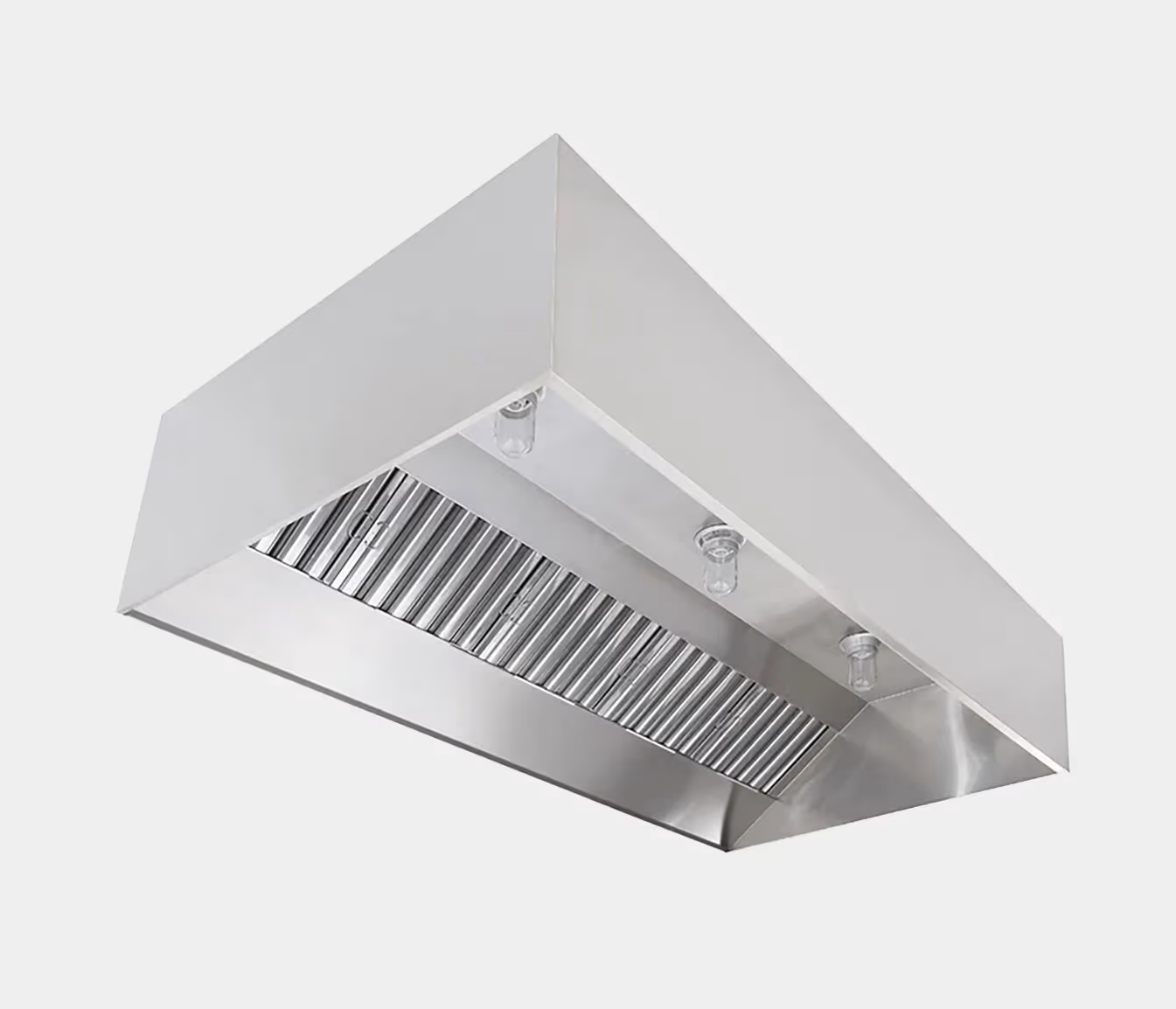
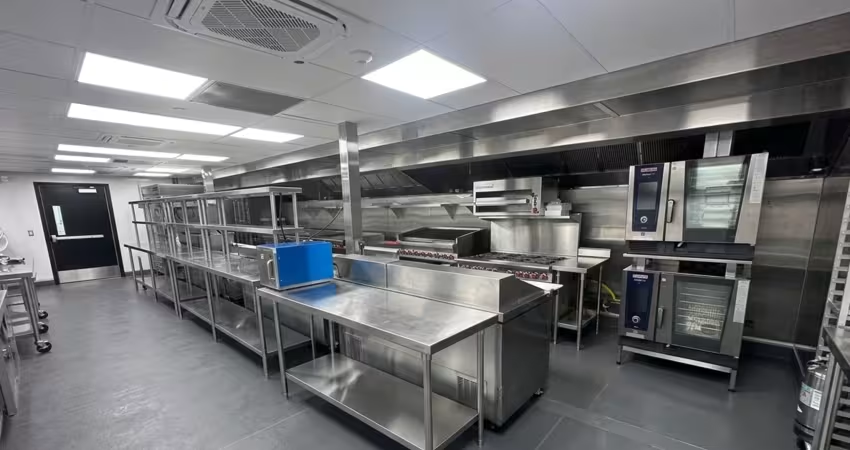
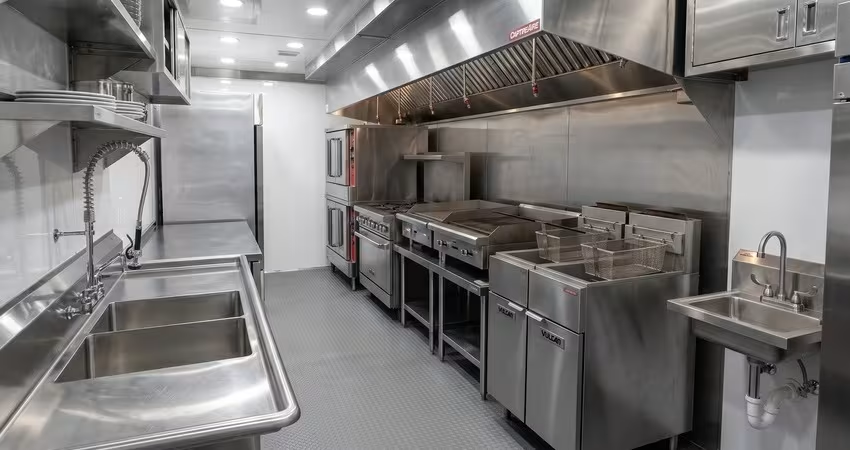
Type I hoods — commonly called grease hoods — capture grease-laden vapors, smoke, and heat from high-output cooking equipment. They carry the heavier-duty requirements to match.
What defines a Type I hood:
- Grease filtration: Baffle or mesh filters trap grease particles before they reach the ductwork — without them, grease accumulates in ducts and on the exhaust fan, creating a direct fire hazard.
- Fire suppression: Most jurisdictions require a UL 300-compliant wet chemical system integrated into every Type I hood, inspected semi-annually.
- Fully welded ductwork: External joints must be continuous liquid-tight welded or brazed per IMC Section 507.
- Make-up air: Systems exceeding 400 CFM require mechanical make-up air roughly equal to total exhaust volume.
Tip: If any single appliance under a shared hood requires Type I classification, the entire hood must be rated Type I. You can't mix classifications under one canopy — IMC 507.2 is explicit on this.
Type II — Condensate Hoods
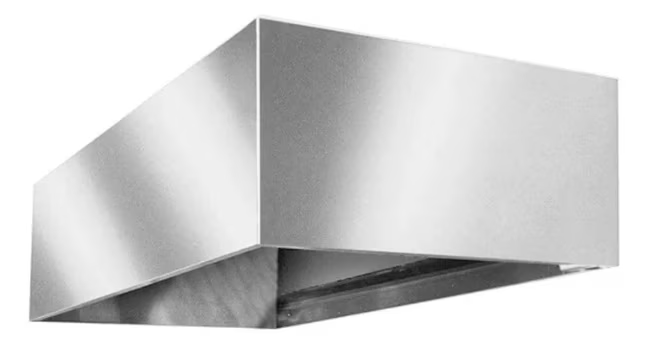
Type II hoods handle heat, steam, moisture, and odors from equipment that does not produce grease-laden vapors. They're simpler, lower in cost, and subject to fewer regulatory requirements — but not interchangeable with Type I.
What defines a Type II hood:
- No grease filtration: A duct collar exhausts air directly — no baffle filters.
- No fire suppression in most jurisdictions (verify with your local AHJ).
- Internally sealed joints — smooth, cleanable, water-tight, but not required to be fully welded.
- Lighter material gauge: Minimum 0.0296 in. steel, versus the 0.0466 in. required for Type I.
How to Match Each Hood to Your Equipment Line
The hood classification follows the appliance, not the kitchen. The decision is binary: does the equipment underneath produce grease-laden vapors, or does it produce only heat and steam? Grease means Type I. Heat and steam only means Type II. Here's how the most common commercial kitchen equipment sorts out.
Equipment-to-Hood Reference
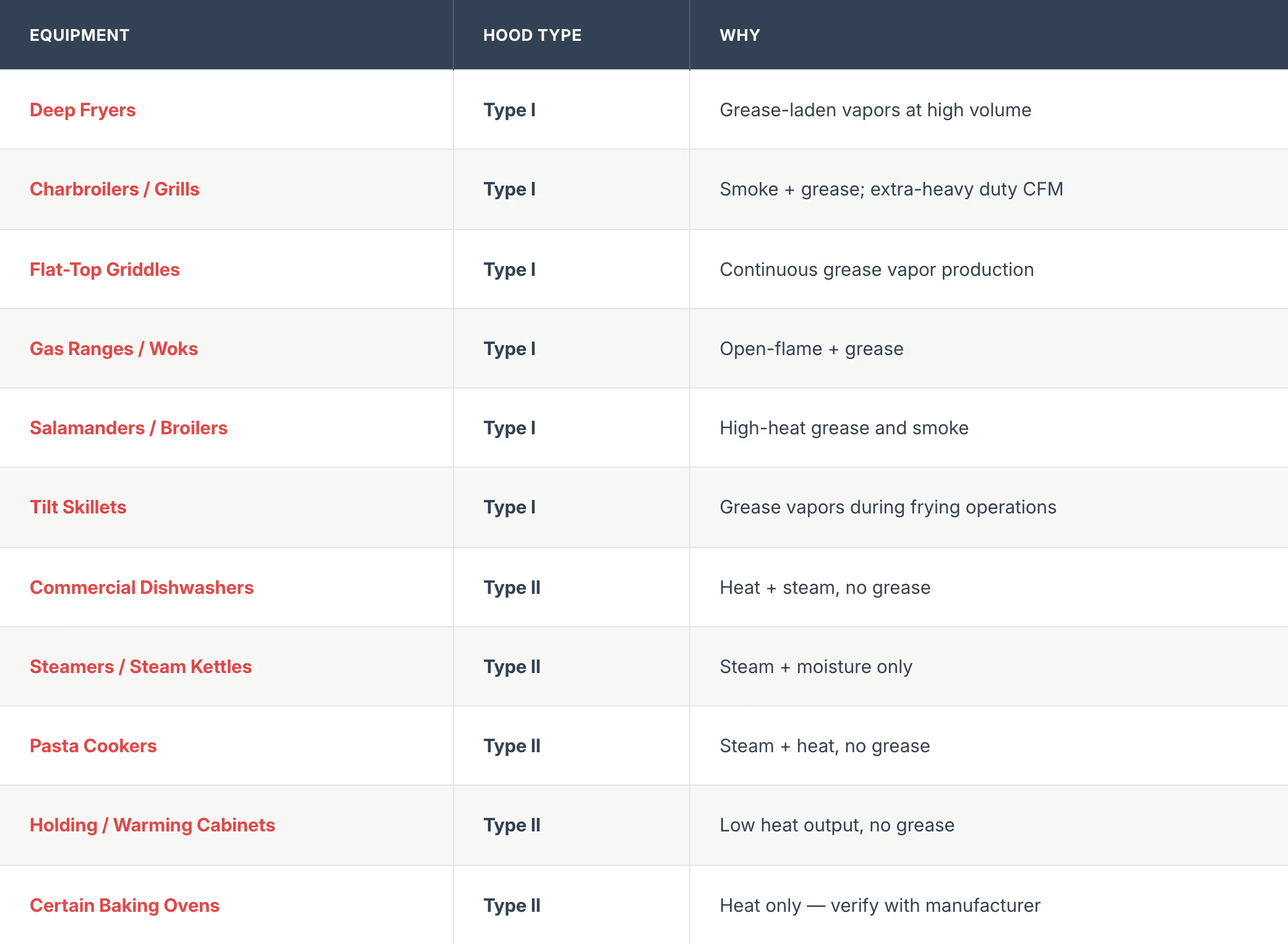
Note: Convection ovens are a common point of confusion. Most fall under Type I because they can produce grease vapors depending on the cook. Some ventless models are exempt. Per WebstaurantStore's code guide, check the manufacturer spec and local code before assuming Type II for any oven.
The Code Requirements That Drive the Type I vs. Type II Exhaust Hood Decision
Choosing wrong doesn't just create a ventilation problem — it creates a compliance problem. A failed hood inspection during a kitchen build can delay your opening and put the metrics you're judged on — inspection scores, event execution, food-cost control — at risk.
Two documents govern the decision in most U.S. jurisdictions: NFPA 96 (hood design, fire suppression, cleaning schedules) and the International Mechanical Code, Chapter 5 (airflow rates, duct construction, hood classification — IMC 507.2 for Type I, 507.3 for Type II). Your local AHJ may enforce an older adopted edition of either, so always confirm before finalizing specs.
Key Code Differences at a Glance
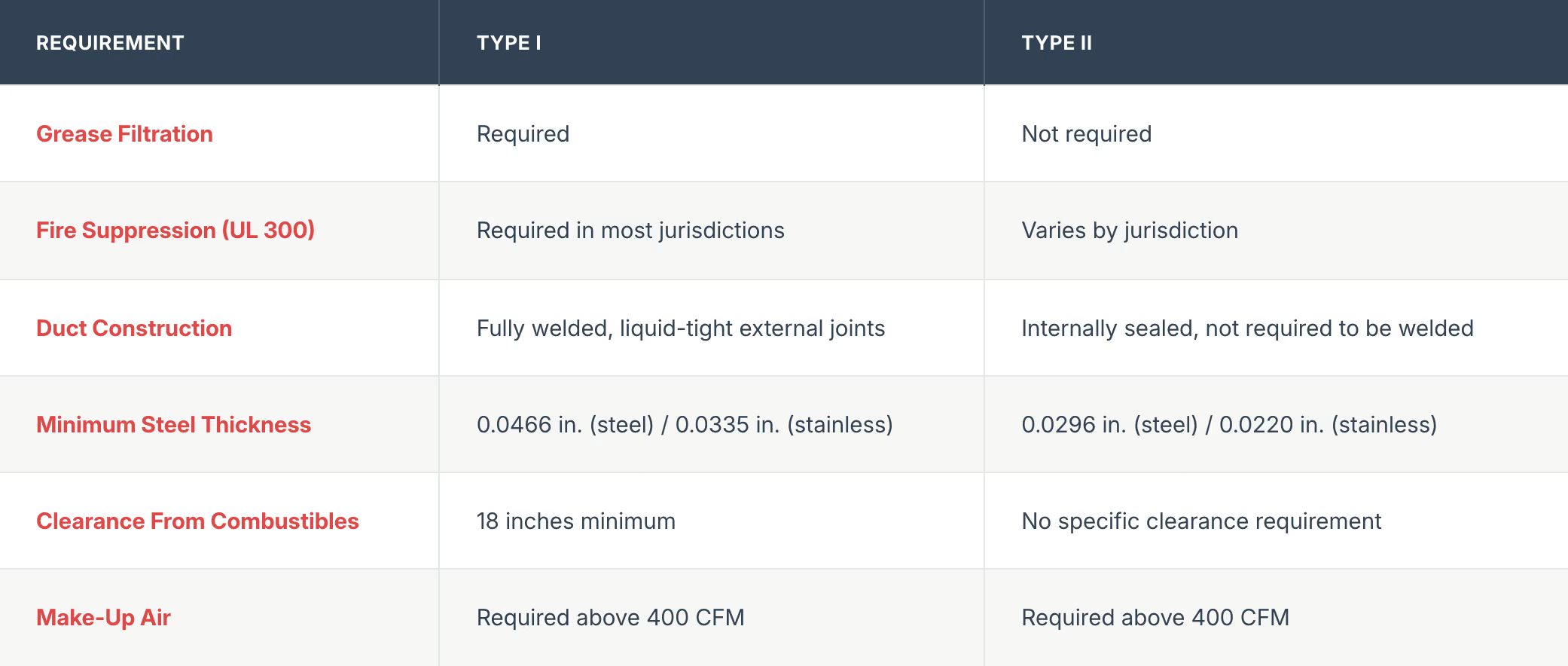
Tip: Local jurisdictions can and do add requirements beyond the IMC and NFPA 96 baseline. According to The Restaurant Warehouse's ventilation guide, always confirm with your local AHJ before finalizing any hood specification — what's compliant in one county may not pass in the next.
What Happens When You Choose Wrong
Misclassifying even one hood cascades through the entire project. The consequences hit the metrics a chef is judged on — inspection scores, on-time openings, food-cost control during prolonged disruption. Here's how a wrong call plays out.
- Failed inspection and forced retrofit
A Type II hood over grease-producing equipment won't pass a fire marshal's review. Ripping it out means re-routing ductwork, adding fire suppression, and re-permitting — weeks added to the schedule.
- Schedule delay and lost revenue
Traditional kitchen construction already runs 12–18 months. A hood reclassification mid-build pushes that further. Every week of delay is a week of lost service.
- Fire risk
A Type II hood has no grease filtration. Grease vapors entering its ductwork accumulate invisibly, raising the fire risk with every shift.
- Insurance exposure
Non-compliant ventilation can void coverage. According to Foodservice Equipment & Supplies, a single grease fire from inadequate ventilation can exceed $23,000 in direct damages — not counting downtime.
Note: If you're inheriting a kitchen that "someone who wasn't a chef" designed — and building years of workarounds before you get buy-in for a fix — the hood classification is one of the first things to audit.
Sizing, CFM, and Make-Up Air — the Specs That Matter
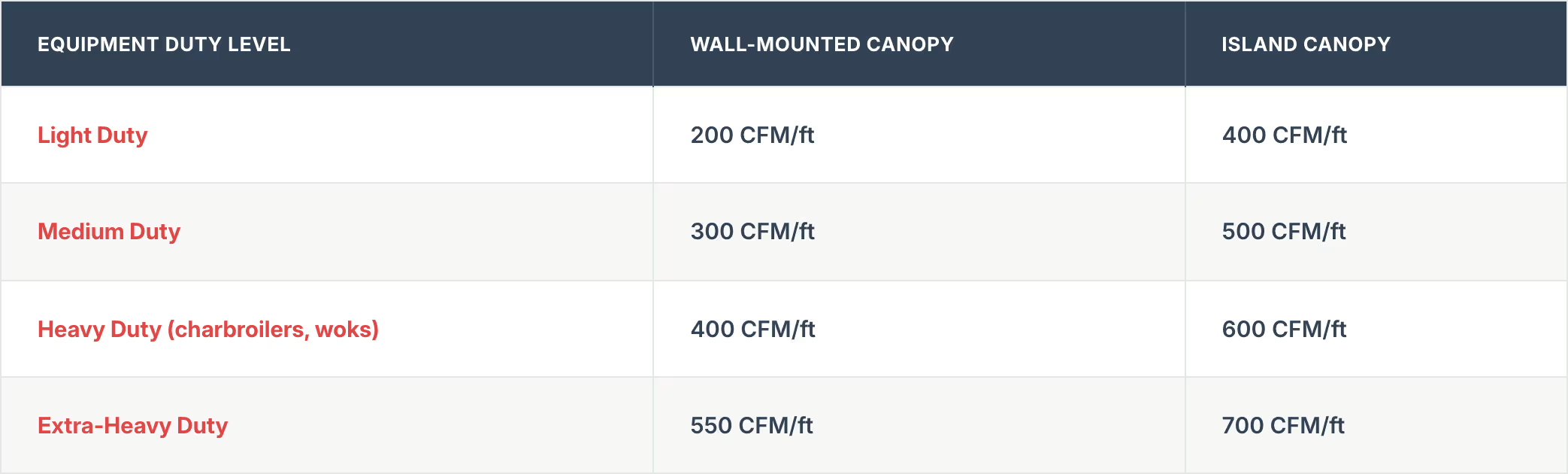
Once you've assigned the correct hood type, the next decision is airflow. An undersized hood can't capture effluent; an oversized one wastes energy and pulls conditioned air out of the building. The IMC prescriptive method sizes airflow by equipment duty level and hood configuration.
Prescriptive CFM Rates (IMC Table 507.13.1)
Sizing Rules to Follow
- Overhang: Extend at least 6 inches beyond the cooking surface on all open sides.
- Elevation: No more than 4 feet between cooking surface and hood.
- Make-up air: Systems over 400 CFM require mechanical make-up air roughly equal to exhaust volume, interlocked with the exhaust fan.
- Heaviest appliance governs: When multiple appliances share one hood, the highest-duty appliance sets the CFM rate — never averaged.
Tip: For installation types, ductwork routing, fire suppression, and maintenance, see our complete exhaust hood guide. For how ventilation fits the broader spec process, see our commercial kitchen equipment guide.
How a Prefabricated Kitchen Simplifies the Whole Decision
Everything above — hood classification, CFM calculations, ductwork routing, fire suppression, make-up air — is coordination work. In a traditional brick-and-mortar build, that coordination spreads across five or more trades. It takes months and routinely produces the errors described above.
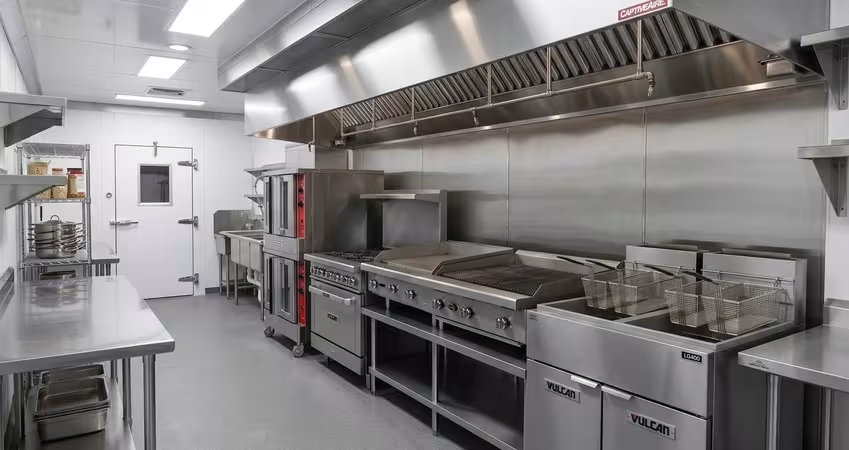
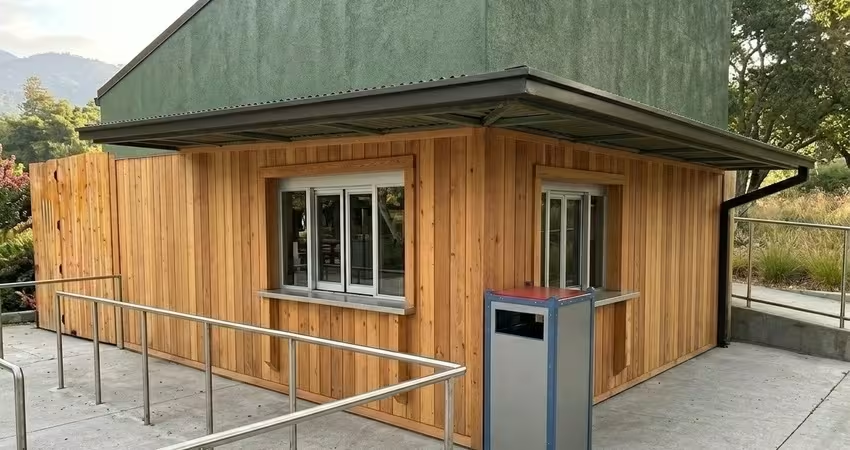
A Modular Culinaire prefabricated kitchen arrives with hood systems, HVAC, fire suppression, and MEP pre-installed and pre-inspected in a factory-controlled environment. Type I hoods sit over the cook line with filtration and fire suppression already integrated. Type II hoods cover the dishwashing and steam stations. Every system is matched to the equipment, sized to the correct CFM, and built to code before the unit leaves the manufacturing floor.
Boyne Resorts needed a kitchen operational before ski season — a narrow May-to-September window. Their Modular Culinaire kitchen was manufactured in 12 weeks with the ventilation system pre-installed and delivered ready for commissioning — roughly 30% cost savings versus traditional construction and zero on-site ventilation rework.
That's the difference between coordinating a hood specification across five trades over six months and receiving a kitchen where the decision was already made correctly. See how the full process works, or explore our country club kitchen solutions for examples of what a turnkey build looks like.
Make the Right Call Before Construction Starts
The Type I vs. Type II exhaust hood decision feels technical until it goes wrong — then it becomes an operational, compliance, and budget problem all at once. Map every appliance to the correct hood type, verify CFM requirements against IMC prescriptive rates, and confirm local code with your AHJ before the drawings are finalized.
If you'd rather skip the coordination risk entirely, talk to our team about a prefabricated kitchen where the ventilation system arrives pre-engineered, pre-installed, and ready to pass inspection on delivery.
Disclaimer
This article is for informational and educational purposes only. Code requirements, permitting processes, and enforcement standards vary by jurisdiction. Always consult your local authority having jurisdiction (AHJ), a licensed mechanical engineer, and your fire marshal before making ventilation design or installation decisions. Modular Culinaire does not provide legal, engineering, or code-compliance advice.
People Also Ask (FAQ)
What is the difference between a Type 1 and Type 2 exhaust hood?
A Type I hood captures grease-laden vapors, smoke, and heat from equipment like fryers and grills. It requires grease filtration, fully welded ductwork, and fire suppression. A Type II hood removes heat, steam, and moisture from non-grease-producing appliances like dishwashers and steamers — simpler construction, no grease filtration or fire suppression in most jurisdictions.
Does a convection oven need a Type I or Type II hood?
Most commercial convection ovens require Type I because they can produce grease vapors depending on what's being cooked. Some ventless models have integrated hoods and may be exempt. Always check manufacturer specs and local code before classifying any oven as Type II.
Can you use a Type II hood over a fryer?
No. Fryers produce grease-laden vapors requiring a Type I hood with filtration and fire suppression. A Type II hood over a fryer creates a fire hazard, will fail inspection, and can void insurance coverage. No exceptions under IMC 507.2.
How do I know which hood my kitchen needs?
Start with your equipment list. Every appliance that produces grease — fryers, griddles, charbroilers, ranges, woks — requires Type I. Everything producing only heat, steam, or moisture — dishwashers, steamers, holding cabinets — uses Type II. If any appliance under a shared hood requires Type I, the entire hood must be Type I.

.jpeg)
.jpeg)
Tell us about your kitchen needs and request a quote.

Turnkey prefabricated kitchen
Proudly made in-house in the USA
Commercial grade kitchen equipment
Code-compliant
Trusted by Industry Leaders



