What does "you belong here" look like, built in steel and tile?
That's the question at the center of Cultivate Initiatives' Hygiene Hub — and it's the question every nonprofit and municipality quietly wrestles with when they invest in modular shelter facilities. This is Part 2 of our case study on the 40-foot modular restroom and shower unit installed at the East Portland Workforce Hub. Part 1 covered the operational problem and what was delivered. Part 2 covers what changed once the unit was in service.
The through-line: quality infrastructure isn't a luxury layer added on top of shelter operations. It's the mechanism by which the service communicates its values.
Beyond Function: What Guests Told Us
These amenities are sometimes described as "basic services." As Cultivate Initiatives told us, the impact is anything but basic. A hot shower, clean clothing, fresh laundry, and a safe place to prepare a meal can help restore dignity, health, and a sense of normalcy. They also create routine — the ability to shower before an interview or wash clothing before an appointment.
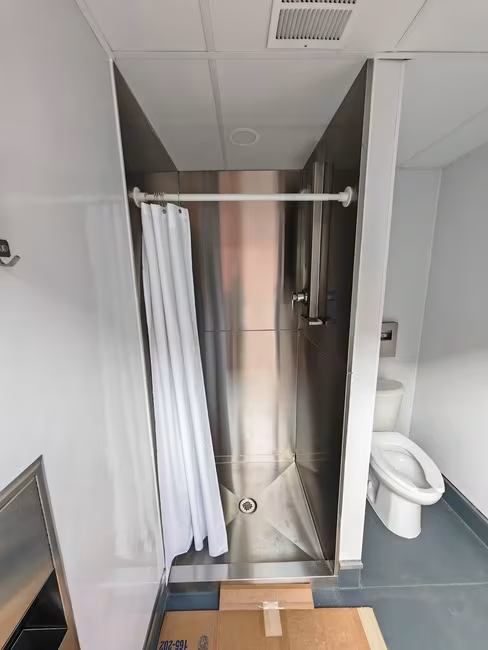
"Guests notice when a space has been thoughtfully designed and cared for," Cultivate said. "Privacy, cleanliness, reliable hot water, warmth, and enough room to comfortably get dressed can make an enormous difference."
A shower is deeply personal, and the facility is either an act of welcome or a signal the person should feel grateful for whatever they were given. Cultivate rejects the second framing: "We never want our neighbors to feel that they should be grateful for whatever they are given simply because they are experiencing homelessness."
What specific design choices communicate in practice:
- Privacy — enough space to undress, wash, and dress without exposure
- Sanitation — surfaces that can actually be cleaned, drainage that works
- Warmth — insulated envelopes that hold heat through Portland winters
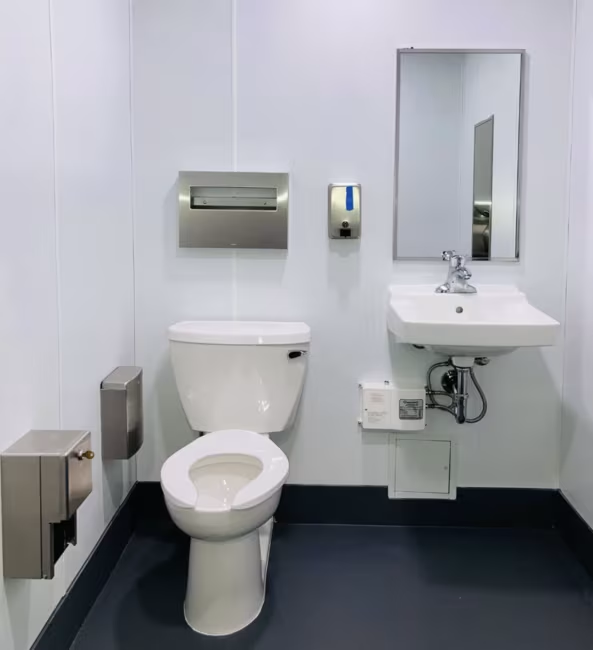
- Autonomy — an ADA-accessible stall means guests using mobility aids can use the service without asking for help
- Reliability — a facility that doesn't break under the daily load
A well-designed hygiene facility isn't just a service delivery point — it's a doorway. As Cultivate put it: "Someone may initially come to us for a shower, but during that visit they connect with a staff member, nurse, peer mentor, employment opportunity, or housing resource." The physical facility creates the reason to show up. What happens inside is where the real work begins.
A 2016 national survey found that 67% of people experiencing homelessness reported one or more preventable health conditions, and 34% said their health made it difficult to keep a job. Hygiene access isn't cosmetic — it affects employability, health, and recovery from crisis.
How Quality Infrastructure Builds Community Trust
The physical facility is often the only thing residents nearby see day-to-day, which makes it the most influential piece of community communication a shelter operator has. Cultivate frames it this way: "Infrastructure communicates values. A shelter that is clean, organized, attractive, and intentionally designed sends a message to both its residents and the surrounding neighborhood that the site is being responsibly operated and that the people living there are valued."
That message matters for practical reasons:
- Reduced visual disorder — well-designed exteriors don't read as ad-hoc encampments
- Improved sanitation — code-compliant plumbing and drainage don't create nuisance conditions
- Demonstrated permanence of investment — the neighborhood sees commitment to standards
- Bridging distance — Cultivate pairs infrastructure with community programs (Eat & Greet dinners, the Community Beautification team, neighborhood partnerships) to connect housed and unhoused neighbors
Quality infrastructure helps "demonstrate that a shelter is a meaningful community investment rather than a temporary problem that has been placed in a neighborhood." A facility that looks and operates like civic infrastructure is treated as civic infrastructure.
Note: The U.S. Access Board notes that homeless shelters — as government-owned, government-operated, or publicly funded social service facilities — are subject to the same accessibility requirements as any place of public accommodation. That's the legal floor; well-designed facilities go further.
Speed vs. Quality: Why Cultivate Initiatives Didn't Rush
Nonprofits often frame the choice as fast versus slow. Cultivate reframed it as fast versus right. "While we were eager to get this done, it was most important that it was done correctly and with quality and intention."
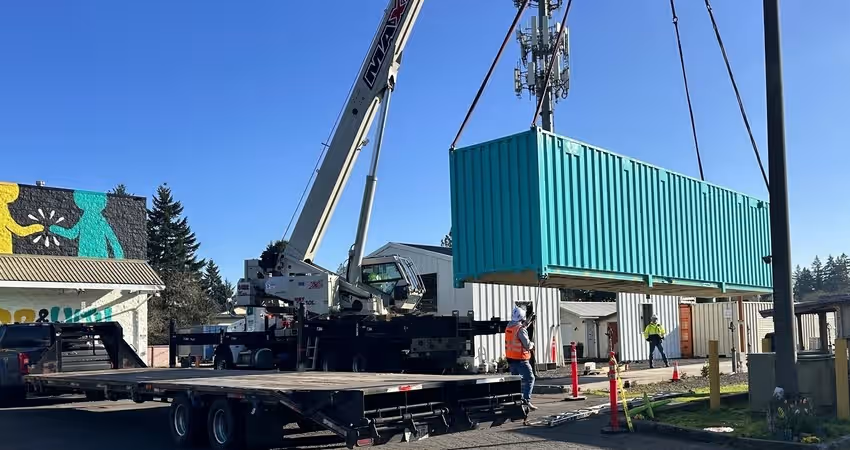
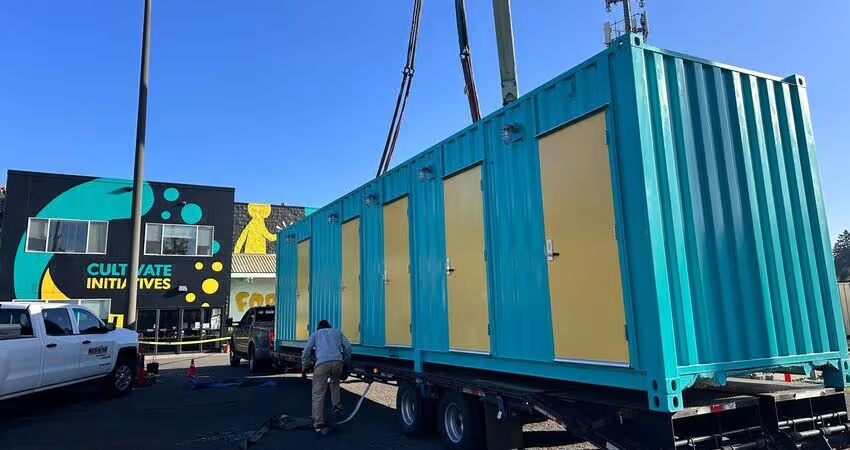
This is where a genuine reframe applies. Nonprofits considering permanent hygiene infrastructure often default to traditional brick-and-mortar construction — assuming it's the only path to durability. It isn't. Factory-built modular units deliver commercial-grade construction and schedule certainty at the same time, sidestepping the 12–18 month timelines that make site-built infrastructure difficult for grant-funded programs to plan against.
The tradeoffs to think through:
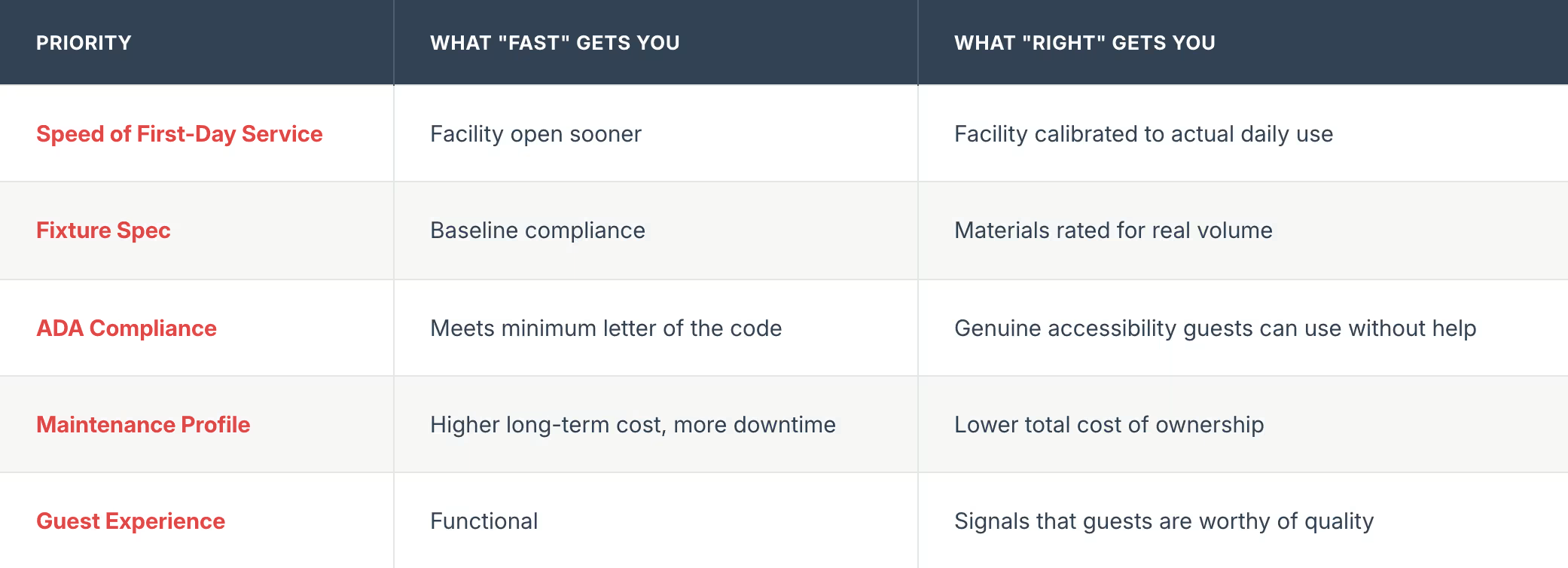
Tip: When evaluating a provider, ask two questions. What annual use profile was the unit engineered for? And when a fixture fails, how quickly can it be serviced and by whom? These tell you more than any deployment-speed claim.
Advice for Nonprofits Evaluating Modular Shelter Facilities
The most valuable guidance from Cultivate: bring frontline staff into the design conversation early. "The people who operate the facility every day understand traffic flow, privacy concerns, storage requirements, cleaning needs, and potential safety issues in ways that may not be obvious from a set of plans."
A practical checklist:
- Start with the user experience. Is the facility genuinely accessible, not just technically compliant?
- Involve operations early. Frontline staff know things that don't show up on drawings.
- Specify for actual volume. Ask what unit throughput the design assumes and compare to your projected demand.
- Plan for maintenance access. Fixtures that require full unit disassembly create long downtimes.
- Verify compliance in writing. ADA Section 233, local plumbing and health codes — get stamped plans, not verbal assurances.
- Ask about relocation. A relocatable unit preserves capital if the site or program changes.
For further reading, a 2024 WASH-focused study on hygiene needs among people experiencing homelessness is a useful reference for grant applications.
The Bigger Picture: Infrastructure as a Foundation for Dignity
Infrastructure alone doesn't end homelessness — but the right infrastructure creates the conditions in which the actual solutions become possible.
Cultivate's framing:
"Infrastructure alone does not end homelessness. A shower does not replace housing, employment, healthcare, or human connection. But the right infrastructure creates the conditions in which those next steps become more possible."
What that looks like in practice:
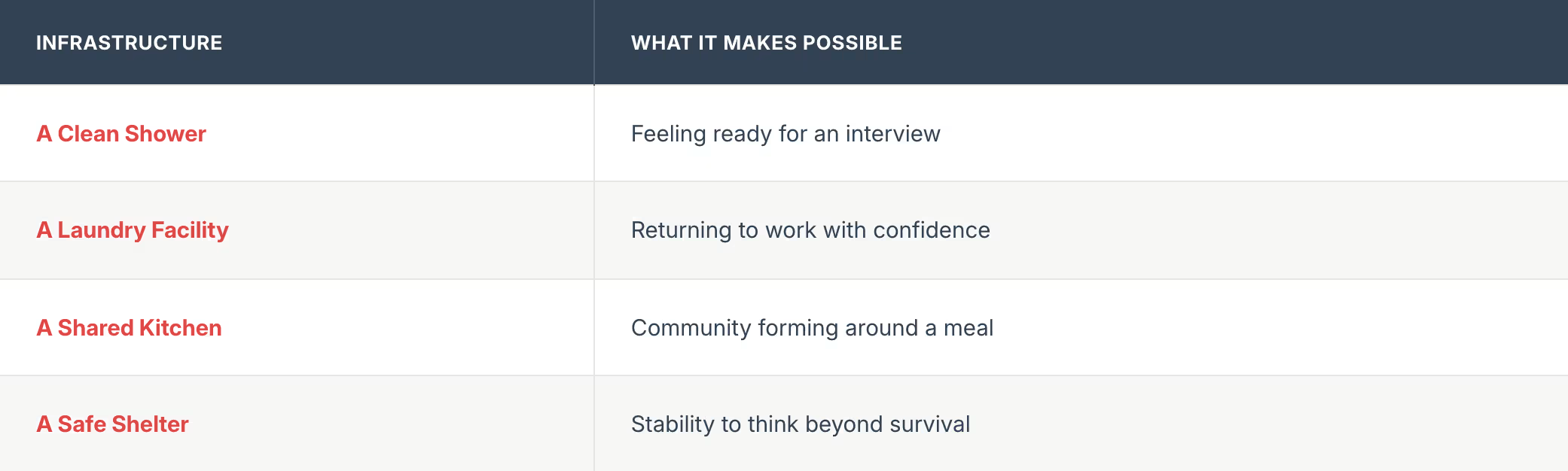
"The shower container is a physical structure, but what happens inside it is much larger: dignity is restored, trust is built, relationships begin, and neighbors take another step toward stability."
That's the role infrastructure plays. As Cultivate puts it, it helps them create spaces where people are "not merely served, but seen, welcomed, and reminded that they belong."
Not the endpoint — but the ground the rest of the work stands on.
Note: For nonprofit and municipal decision-makers, the practical implication is this: facility selection is a mission decision, not a procurement decision.
Why This Matters for Your Next Project
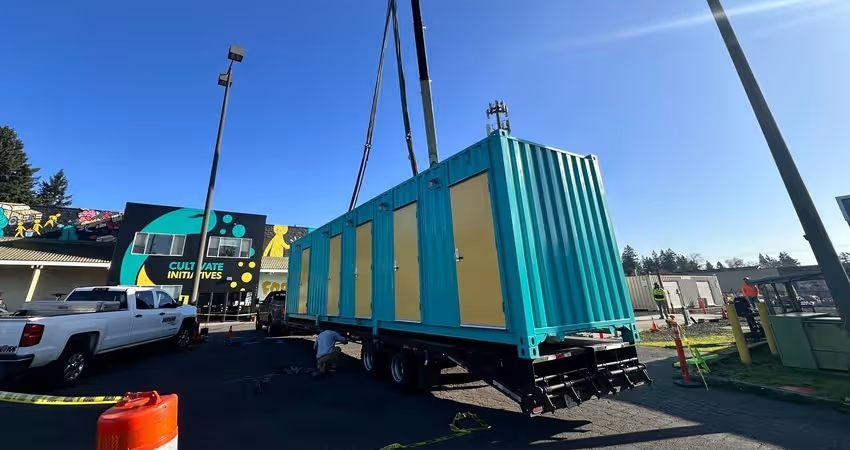
Cultivate put it simply: their partnership with Modular Culinaire "helped translate an urgent human need into a durable, functional facility."
At Modular Culinaire, we build factory-built commercial kitchens for hotels, resorts, country clubs, and food-service operators — applying the same engineering discipline that produced the Hygiene Hub. That discipline is visible in projects like our ADA-compliant restroom and QSR modules for a major mountain resort: commercial-grade materials, code-compliant design, and units built for the volume and duration they'll actually see.
If you're evaluating modular shelter facilities — a restroom, shower, or kitchen unit for a shelter program, workforce hub, or public-service site — let's talk.
Disclaimer
ADA scoping and technical requirements are set at the federal level, but their application depends on local building codes, health department requirements, and the authority having jurisdiction (AHJ). Confirm current requirements with your AHJ before finalizing specifications.
People Also Ask (FAQ)
What should nonprofits look for in a modular shelter facility provider?
Start with the operational reality: annual use volume, ADA accessibility beyond minimum compliance, materials rated for the actual daily load, and serviceability of fixtures. Bring frontline staff into the design conversation before finalizing plans — they'll surface traffic-flow, storage, and safety issues that don't appear on drawings. Ask the provider for stamped compliance documentation and confirmation the unit is relocatable if the program moves.
How does hygiene access affect health outcomes for people experiencing homelessness?
Access to showers, restrooms, and laundry is linked to lower rates of skin and gastrointestinal infection, better medication adherence, and improved employability. A 2016 national survey found that 67% of people experiencing homelessness reported one or more preventable health conditions. Restroom avoidance driven by lack of access is documented to hinder medical treatment and contribute to public-health outbreaks like Hepatitis A.
Can modular restroom units be relocated if a shelter's needs change?
Yes. Purpose-built modular restroom and shower units are engineered as relocatable assets. When a program shifts location, sunsets, or expands, the unit can be craned out, transported, and re-installed at a new site — a fundamental difference from traditional site-built construction. That flexibility is one reason modular suits shelter and workforce programs, where site tenure and program scope often evolve over time.
%2520(1)%2520(1).avif)
Tell us about your kitchen needs and request a quote.

Turnkey prefabricated kitchen
Proudly made in-house in the USA
Commercial grade kitchen equipment
Code-compliant
Trusted by Industry Leaders



