In January 2025, Portland State University's Homelessness Research & Action Collaborative counted 10,526 people experiencing homelessness in Multnomah County alone — a 67% increase over 2023, even after the county added more than 850 shelter beds. Beds solve one part of the problem. The bottleneck that follows is quieter and less funded: reliable, code-compliant sanitation infrastructure. Once a site has beds, it needs working showers and restrooms that can absorb dozens of guests every day, every week, for years.
This blog is the first of a two-part case study on how Cultivate Initiatives — an East Portland nonprofit — replaced a failing retrofitted shower trailer with a purpose-built 40-foot modular restroom and shower unit designed specifically for homeless shelter operations. Part 1 covers the organization, the operational problem, and what was delivered. Part 2 covers dignity, guest response, and what other nonprofits should know before commissioning similar infrastructure.
Who Is Cultivate Initiatives?
Cultivate Initiatives serves East Portland and East Multnomah County. Its focus is neighbors experiencing houselessness, housing instability, and unemployment — communities the organization approaches through partnership rather than intervention.
"We recognize [people's] strengths, experiences, and potential," the organization told us, "rather than approaching people as problems to be solved."
The mission runs through three interlocking programs.
Three Programs, One Mission
- Supportive Sheltering: Provides a safe place to rest, rebuild routines, and identify goals. Cultivate Initiatives operates the Menlo Park Safe Rest Village and provides mobile hygiene services across Portland.
- Workforce Development: Creates paid opportunities for neighbors to earn income, gain experience, and rediscover purpose — including the well-known Community Beautification team.
- Housing & Homemaking: Helps people navigate the process of finding housing, then provides ongoing support to maintain it.
The programs are designed to work together. Someone may first engage with Cultivate through a shower, a beautification job, or an emergency shelter — the entry point matters less than what happens once the relationship exists.
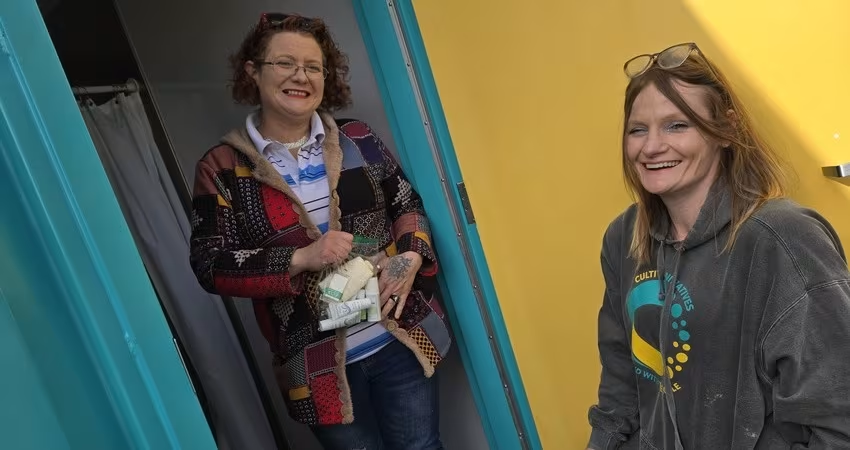
Note: Cultivate Initiatives averages more than 90 showers per week from its Hygiene Hub. In 2025 alone, the organization delivered 3,650 showers — all from a retrofitted trailer that was consistently breaking down.
The Hygiene Gap at the Workforce Hub
The Hygiene Hub sits at the Cultivate Initiatives Workforce Hub. It is, on any given day, the busiest touchpoint the organization has with the unhoused community — dozens of people seeking services daily.
The research is unambiguous on why this matters. According to a study in the Journal of Water, Sanitation and Hygiene for Development, lack of restroom access is directly associated with hindered medication adherence, higher rates of skin and gastrointestinal infection, and restroom avoidance behaviors. The Network for Public Health Law has documented how inadequate hygiene access has driven Hepatitis A outbreaks in unhoused populations across the country. The infrastructure isn't a nice-to-have. It's the point of contact where public-health risk is either absorbed or amplified.
Why the Old Retrofitted Trailer Couldn't Keep Up
Before the modular unit was installed, Cultivate Initiatives operated its shower service out of a second-hand retrofitted trailer. In the organization's own assessment:
- Not designed for the volume: The trailer technically had three showers, but nothing about its layout was engineered for daily high-traffic use. Guests had no room to change or store belongings.
- Ancillary facilities were failing: Two outdoor bathrooms — also second-hand — broke down regularly.
- No ADA accessibility: None of the fixtures met accessibility requirements, which is both a compliance and an equity issue for a public-facing shelter service.
- Operationally exhausted: "The entire thing was on its last legs," Cultivate's team told us.
This is a recognizable pattern across the shelter sector: sanitation infrastructure is often patched together from what's available, then run past its design capacity. Retrofitted trailers built for construction-site duty aren't engineered for the throughput or the dignity of daily shelter operations.
What Modular Culinaire Delivered
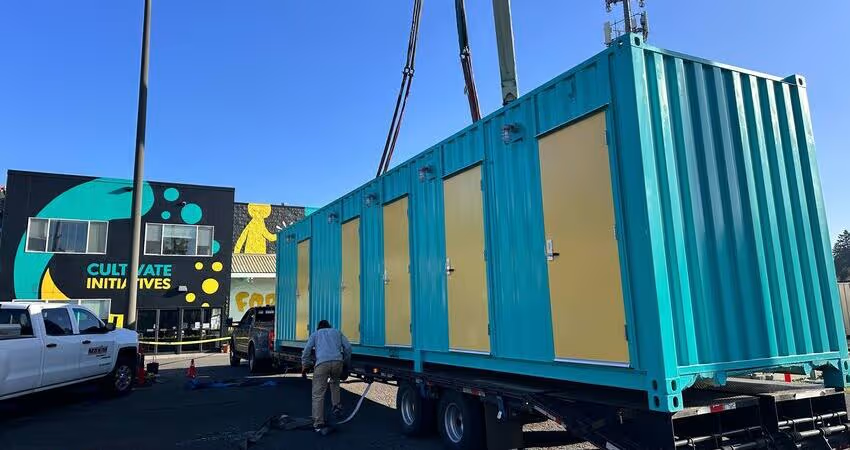
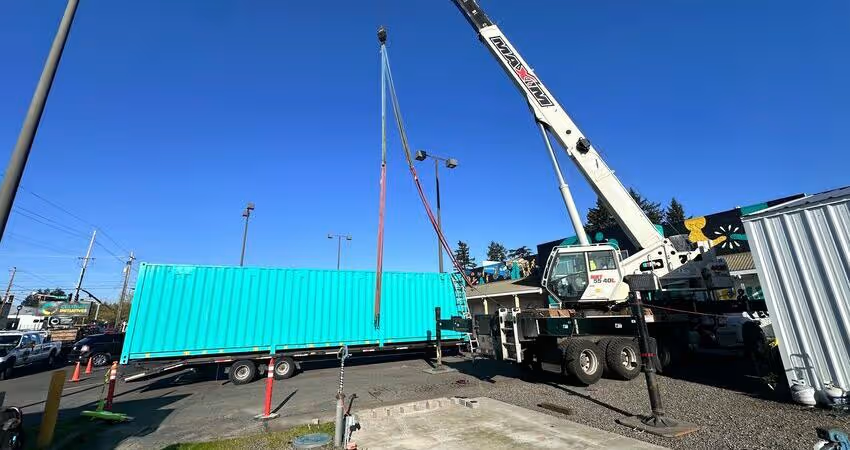
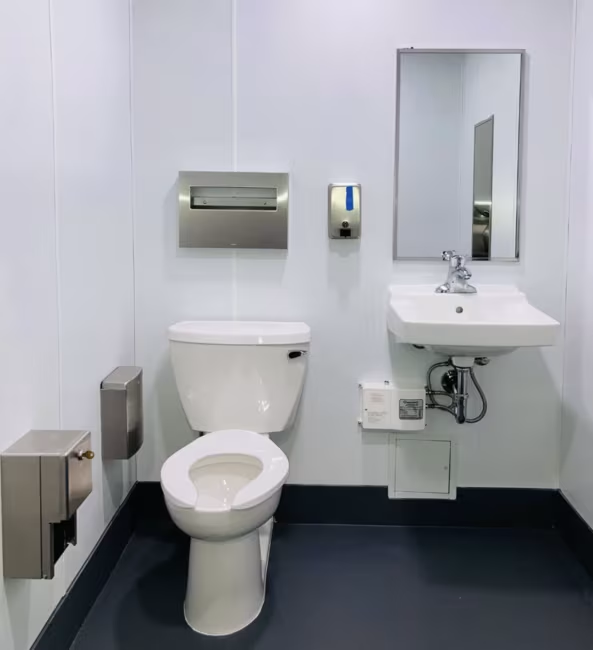
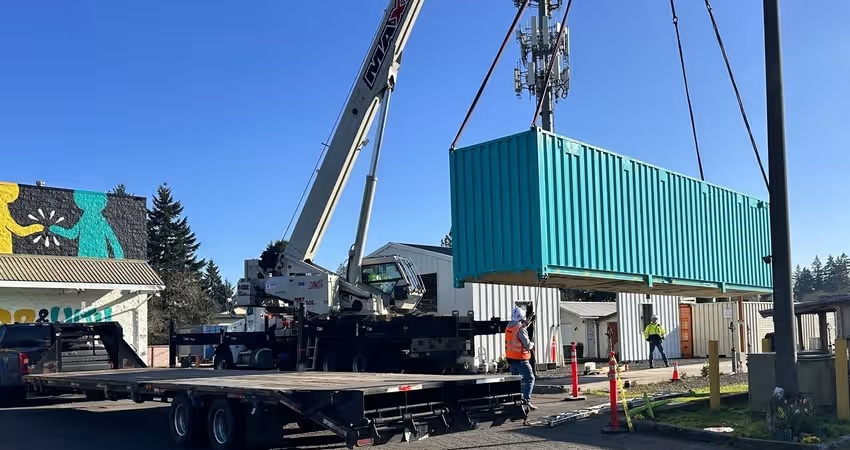
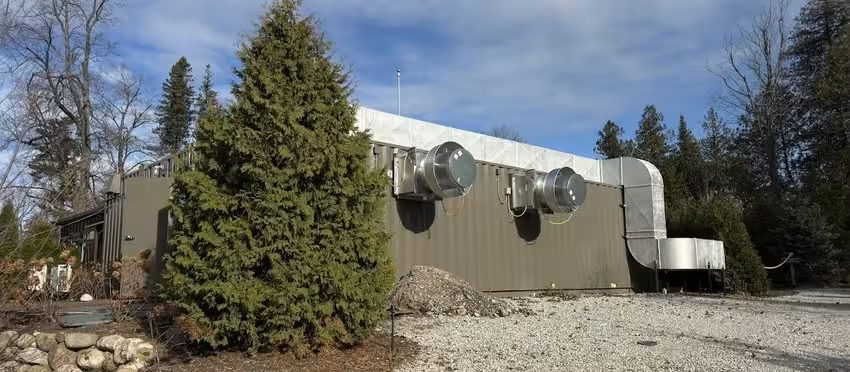
Cultivate Initiatives' partnership with Modular Culinaire and produced a 40-foot modular restroom and shower unit engineered from the outset for shelter operations. The unit arrived pre-finished, pre-equipped, and craned into position at the Workforce Hub in a single deployment window.
The specifications:
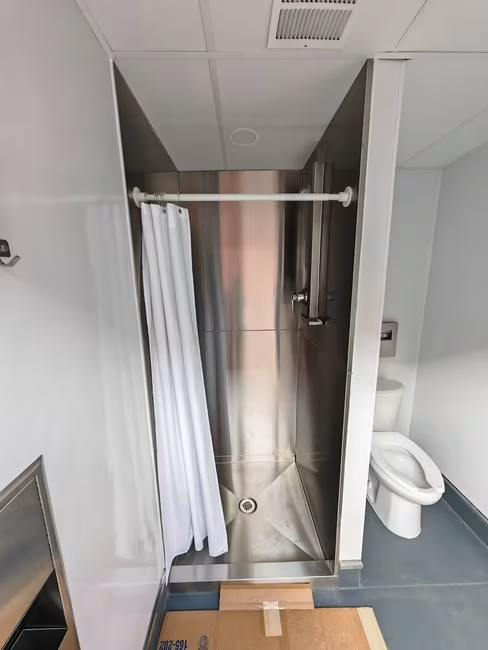
- Five fully equipped bathrooms: Each includes a functional shower, sink, and toilet.
- One ADA-compliant stall: Meets Section 233 of the 2010 ADA Standards for social service center establishments — the technical framework that governs shelter accessibility, distinct from the transient lodging standards that used to apply.
- Corten steel structure: Commercial-grade construction rated for long-term daily use.
- Turnkey plumbing, electrical, ventilation, and fixtures: All installed at the factory, eliminating multiple site trades from the installation sequence. This is the same factory-first fabrication process applied across the modular kitchen line.
- Relocatable: The unit can be moved as program needs change, preserving the capital investment.
Tip: For shelter operations with 50 or more beds, the ADA Standards require at least one roll-in shower with a seat that complies with the relevant provisions of Chapter 6, Bathing Rooms. Transfer-type showers alone are not permitted as a substitute. Most retrofitted trailers cannot meet this bar.
Built for ADA Compliance and Daily Volume
Two engineering priorities shape a facility like this:
- Compliance: The ADA Emergency Shelter Checklist makes clear that if a shelter offers shower or bathing facilities, they must be on an accessible route and meet the technical standards. Retrofits routinely fail this test. Factory-built units are designed against the standard from day one. The same principle applies to kitchen facilities — see our guide to ADA compliance in commercial kitchen design for the parallel discipline.
- Volume: A single Hygiene Hub can absorb 4,500+ showers per year (Cultivate's current run rate of ~90/week extrapolates to ~4,680 annually). The materials, drainage, ventilation, and fixture ratings all need to be specified for that reality — not a residential or seasonal-use profile.
This isn't the first shelter-adjacent deployment in Portland: our shipping container kitchens use-case brief covers the 2022 Portland TASS initiative, where a fully ADA-compliant container kitchen and hygiene facilities were supplied for more than 100 shelter residents. Different program, same engineering principle — code-compliant, factory-built, deployment-ready.
The Difference, By the Numbers
The operational shift after installation:
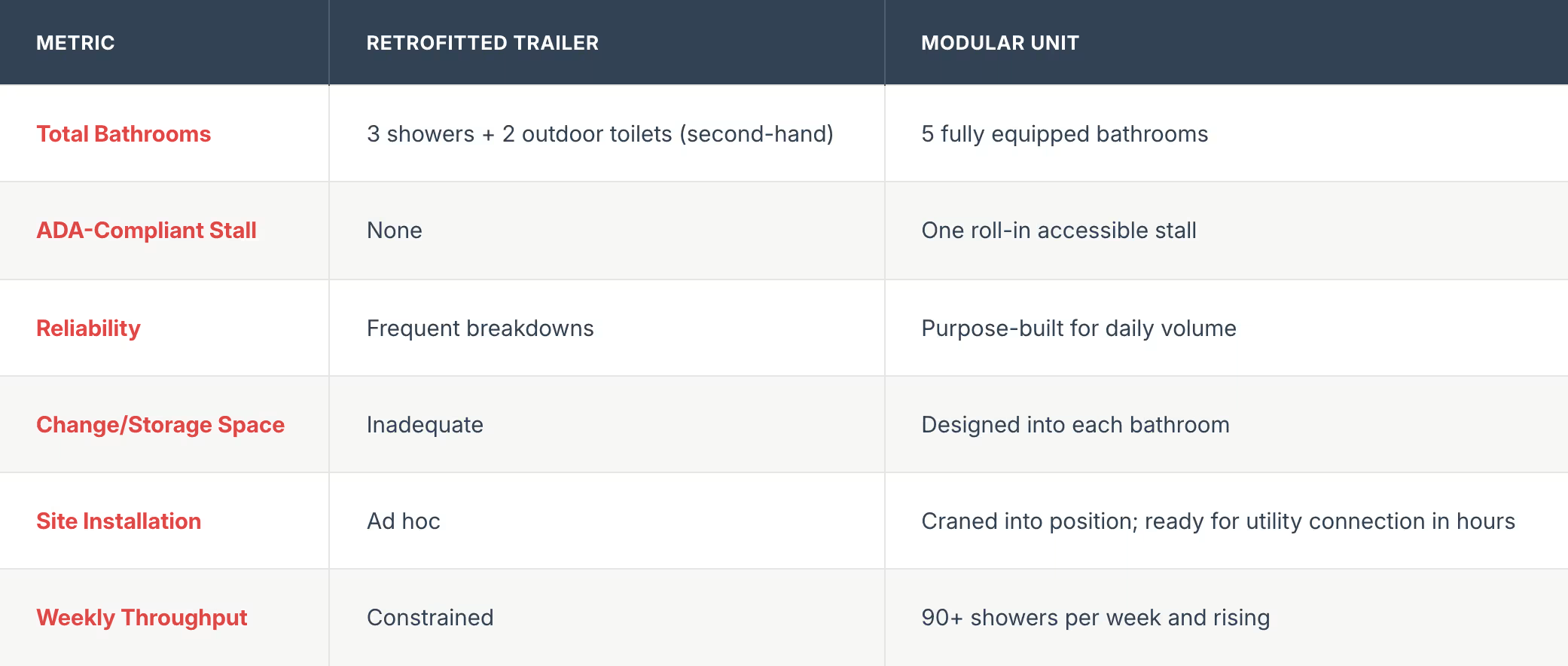
The number that matters most isn't in the table: the guests using the facility experience a service that no longer signals "this is what we could find" and instead signals "this was built for you." We'll cover the human side of that shift in Part 2.
Coming Next
Part 2 of this case study covers what changed once the unit was operational: how guests responded, what quality infrastructure signals to the surrounding neighborhood, why speed of deployment was not Cultivate Initiatives' top priority, and the advice their team offers to other nonprofits and municipalities weighing similar projects.
Planning a shelter, workforce hub, or public-service facility that needs code-compliant, ADA-accessible infrastructure built to absorb daily volume? Modular Culinaire engineers modular restroom, shower, and kitchen units for the operators and organizations who can't afford a facility that fails under real-world use. Get in touch to discuss your project.
People Also Ask (FAQ)
Are homeless shelters required to have ADA-accessible showers?
Yes. Under Section 233 of the 2010 ADA Standards, homeless shelters, group homes, halfway houses, and similar social service establishments must comply with the residential facility provisions. In facilities with more than 50 beds that provide common-use bathing, at least one roll-in shower with a seat is required, and transfer-type showers cannot substitute for it. Where separate men's and women's shower facilities are provided, at least one roll-in shower must be available for each.
How long does it take to install a modular restroom and shower unit?
Factory-built modular units are craned into position and ready for utility connection within hours of arrival on site. Fabrication, permitting, and site preparation happen in parallel over weeks to a few months, depending on scope. Compared to traditional restroom construction — which can take six to twelve months from ground-breaking to occupancy — modular delivery compresses the on-site timeline substantially while preserving code compliance and long-term durability.
How many people are experiencing homelessness in the Portland area?
On January 22, 2025, the Portland tri-county Point in Time Count identified 12,034 people experiencing homelessness across Clackamas, Multnomah, and Washington counties. Multnomah County alone accounted for 10,526 — a 67% increase from 2023, driven by both improved data collection and continuing housing pressures. The count coincided with a regional expansion in shelter capacity that added over 3,000 beds statewide.
%2520(1)%2520(1).avif)
Tell us about your kitchen needs and request a quote.

Turnkey prefabricated kitchen
Proudly made in-house in the USA
Commercial grade kitchen equipment
Code-compliant
Trusted by Industry Leaders



