When a hospitality property builds, replaces, or renovates a commercial kitchen, NFPA 96 compliance is a gate the project has to clear before the doors reopen. For the Director of Facilities coordinating trades, the fire marshal, and an occupied building at the same time, the standard shows up as a documentation chain — not a checklist you tick after opening.
This guide walks through what NFPA 96 requires during a build or replacement, who owns each obligation, and where the timeline usually slips.
What NFPA 96 Is — and Why It Applies to Your Project
NFPA 96 — the Standard for Ventilation Control and Fire Protection of Commercial Cooking Operations — sets minimum fire safety rules for the design, installation, and maintenance of commercial kitchen ventilation and suppression. It applies to any kitchen producing grease-laden vapors, and the enforceable edition today is the 2024 edition.
The standard is written by the National Fire Protection Association, but the NFPA itself doesn't issue fines. Enforcement is local: your city or county adopts NFPA 96 (usually through the International Fire Code) and the local fire marshal — the Authority Having Jurisdiction, or AHJ — reviews plans, inspects the installation, and signs off before you can operate.
Two structural facts follow for a Director of Facilities:
- The AHJ has final say
Model-code compliance is the floor, not the ceiling. Local jurisdictions can and do adopt stricter amendments, and several AHJs (building department, fire marshal, health department, mechanical reviewer) commonly touch the same kitchen project.
- The scope widened in 2024
The 2024 edition of NFPA 96 added Chapter 17 on mobile and temporary cooking operations and clarified responsibility for inspection, testing, and maintenance — relevant if you're using a temporary kitchen during renovation or siting a factory-built unit on your property.
Note: NFPA 96, 2024 is the current published edition. A 2027 edition is moving through the NFPA revision cycle, but until your local AHJ adopts it, the 2024 edition is what enforcement runs on.
The Real Cost of Missing NFPA 96 Compliance
For a Director of Facilities, an NFPA 96 miss shows up as unplanned downtime in an occupied building — deficiency notices before opening, denied insurance claims after a fire, or a repeat inspection that pushes reopening past the season. It's one of the common commercial kitchen construction mistakes that break both schedule and budget.
The Ansul brand of NFPA data reports cooking equipment accounts for over 60% of fires in eating and drinking establishments, causing around $165 million in property damage per year. The National Restaurant Association puts total structure fires at over 9,000 per year.
The financial pattern shows up in three places:
Reinspection Fees Compound
Municipalities use tiered schedules — Dallas Fire-Rescue charges $171, $200, and $255 for the first, second, and third reinspections, with penalties on conviction up to $2,000. Each city sets its own numbers; the escalating structure is common.
Insurance Carriers Pull the Compliance File First
After a claim, the carrier's investigator typically requests the most recent inspection report, cleaning report, and hood service label before releasing funds.
Forced Closure Is Rare but Real
A non-functioning suppression system on an active cooking appliance can trigger an order to stop using it until the system is restored.
Tip: Put the AHJ-facing documentation on a shared drive with the same visibility as your capital-project trackers. Carriers ask for the file in that order — inspection report, cleaning report, hood service label, suppression tag.
.avif)
Who Is Responsible Under NFPA 96 — Owner, Operator, or Manager?
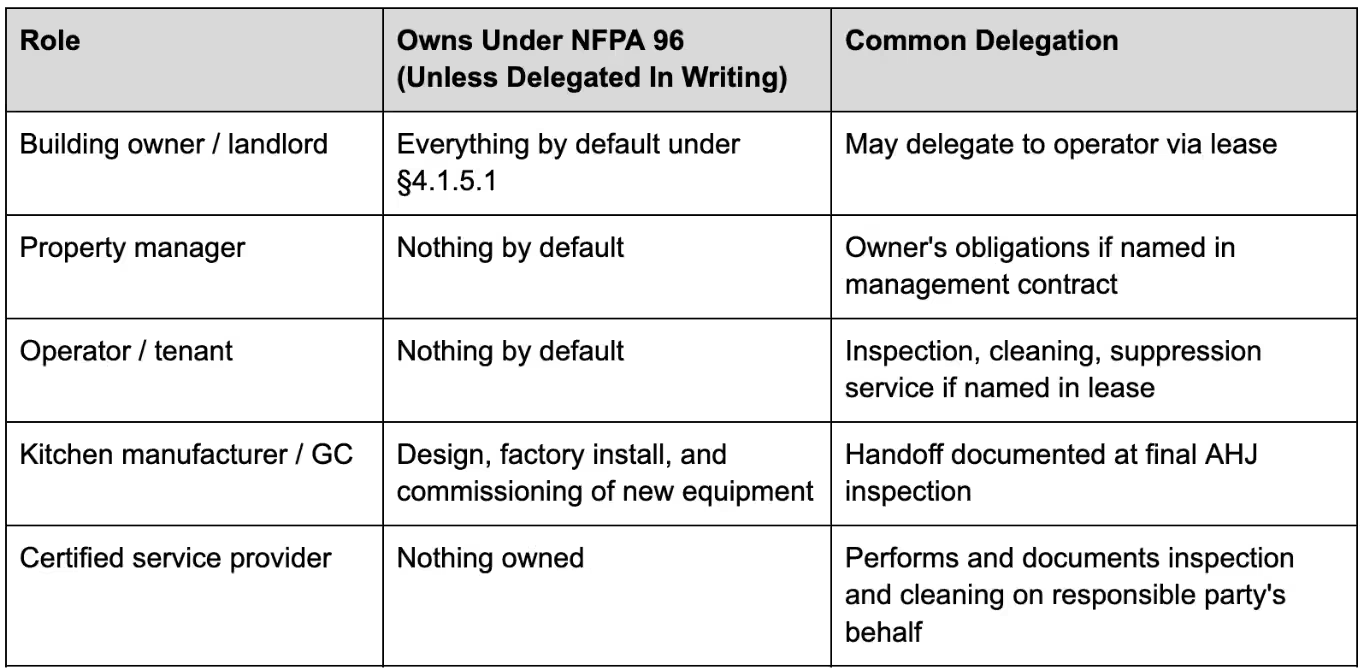
Under NFPA 96 §4.1.5.1, the equipment owner is responsible for inspection, testing, maintenance, and cleanliness of the ventilation, fire protection, and cooking equipment. §4.1.5.2 allows that responsibility to be delegated in writing — through a lease, management contract, or written use agreement — to the operator, a management firm, or an individual.
For a Director of Facilities running a multi-outlet hospitality property, that has three consequences:
- Silent leases default to the owner: If nothing names a responsible party, the equipment owner retains the obligation regardless of who runs the kitchen day-to-day.
- Delegation has to be specific: "Tenant maintains the premises" language rarely names the hood system, the suppression system, or the inspection cadence explicitly.
- Both parties often assume the other is handling it: Field observations from NFPA 96 service providers put ambiguous responsibility language in roughly four of every ten leases reviewed.
The Ownership Matrix for a Typical Hospitality Project
The table below is the framing to work through with legal and operations before the next marshal visit — not a legal opinion for your specific lease.
The Documentation Chain the AHJ Actually Checks
NFPA 96 compliance lives in a paper trail, not in the physical hood. The AHJ signs off on a new or replaced kitchen based on documents produced during design, installation, and commissioning — and the same documents come out at every inspection afterward.
Four Documents That Have to Exist Before Opening
- Stamped design drawings
Mechanical and fire protection drawings, sealed by a licensed engineer, showing hood construction, duct routing, clearances to combustibles, and suppression coverage.
- UL 300-listed suppression system spec
The wet chemical system protecting the cookline must meet UL 300 testing criteria — verifiable in the UL Product iQ database. Only wet chemical systems meet UL 300 for commercial kitchens.
- AHJ acceptance test
After installation, the fire marshal witnesses an acceptance test — commonly a balloon test to confirm nozzle activation, discharge direction, and coverage without discharging wet chemical agent.
- Service label and cleaning/inspection reports
These are for ongoing operation, per §§12.6.13, 12.6.14, and 12.6.15.
The Section-by-Section Requirements That Come Up on Every Project
The sections below come up most often in plan review or final inspection for a hospitality kitchen build. Codes cited are 2024 edition.
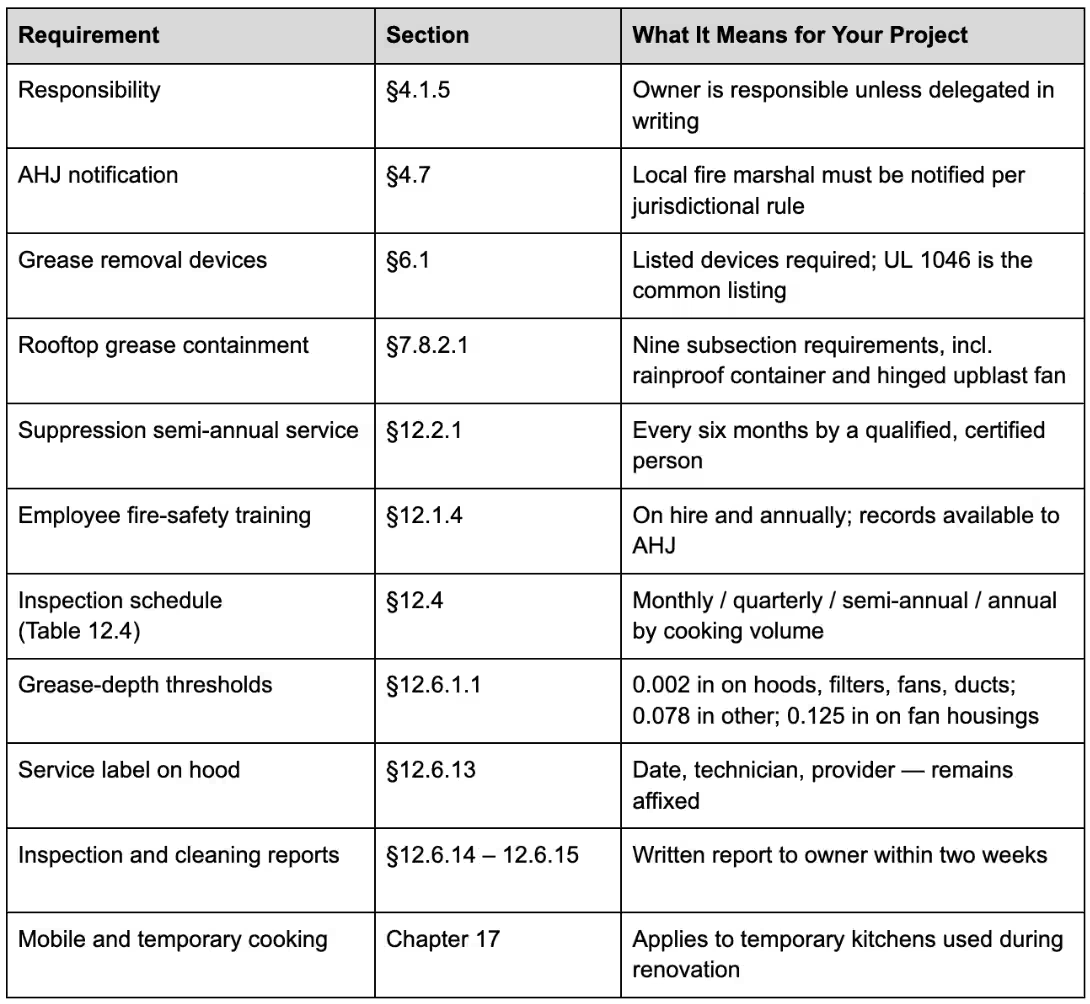
Tip: Ask your kitchen manufacturer and fire protection contractor for a consolidated cover sheet listing every NFPA 96 section their scope answers. It becomes the reviewer's map through the drawing set and shortens plan review.
What Changes When the Kitchen Is Factory-Built
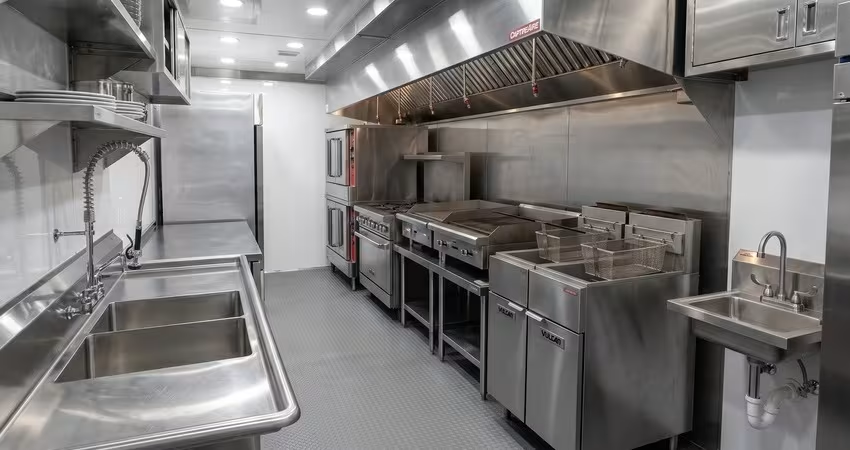
The rules don't change. NFPA 96 applies to a factory-built permanent modular kitchen exactly as it applies to a brick-and-mortar build — same sections, same AHJ, same acceptance test. What changes is when compliance is achieved and who coordinates it on site.
In a traditional build, hood construction, duct routing, suppression installation, and fire-rated assemblies are separate trade scopes coordinated on site — the interfaces between ventilation, fire safety, and utilities are where NFPA 96 deficiencies most often originate. In a permanent modular kitchen, those scopes are executed in a factory before the unit ships, then verified again on site.
Three Shifts for a Facilities Director
- Design and factory installation are complete before delivery
Nozzles, piping, agent tank, and pull station are installed during the factory build, calibrated to the equipment layout, and tested before the unit leaves the plant.
- The final AHJ inspection still happens
The local fire marshal witnesses on-site testing of the suppression system, alarm connections, pull stations, and fuel shutoff before occupancy. Factory pre-compliance does not replace this step.
- Fewer coordination points on site
The marshal inspects one delivered unit rather than a fragmented on-site scope, and MEP, HVAC, and suppression have already been integrated to the same drawings.
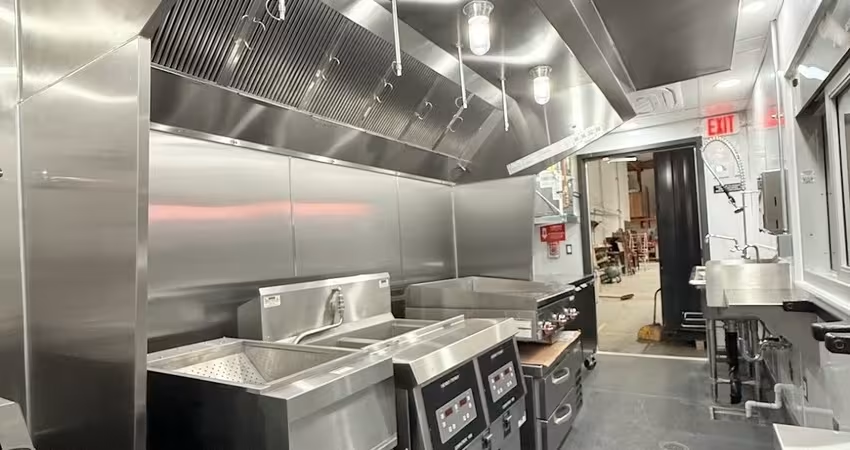
Modular Culinaire's permanent modular kitchens arrive 95% finished with UL 300-compliant suppression, HVAC, and MEP pre-installed — engineered against NFPA, OSHA, and local fire codes before shipping. It's the same envelope Modular Culinaire built to for the Boyne Resorts modular kitchen, delivered before the resort's pre-ski-season opening.
Note: Factory pre-compliance shortens the on-site critical path — not plan review or the AHJ acceptance test. Both still run alongside production, so early plan submission remains the highest-leverage move a facilities director can make.
Ongoing NFPA 96 Compliance After the Kitchen Opens
After opening, NFPA 96 obligations run on two independent cadences the facilities director monitors through the compliance file: exhaust inspection under Table 12.4, with cleaning triggered when grease exceeds the §12.6.1.1 thresholds (0.002 inches on hoods, filters, fans, and ducts), and fire suppression service every six months per §12.2.1.
Cadence for the exhaust side is monthly for solid fuel, quarterly for high-volume, semi-annually for moderate-volume, and annually for low-volume operations. Fire suppression contractor guidance covers the wet chemical (NFPA 17A) side in more depth.
The Five Compliance Gaps a Fire Marshal Sees Most
Deficiencies concentrate in a small number of patterns a facilities director can close proactively:
- Missing or expired hood service label: §12.6.13 requires a label after every inspection or cleaning, with date, technician, and provider — affixed until the next visit.
- Late inspection or cleaning report: §12.6.14 and §12.6.15 give the service provider two weeks to deliver a written report to the owner. A missing report reads as a missing service.
- Blocked or untagged access panels: §12.6.10 requires a service tag near each access panel opened during cleaning.
- Overdue suppression service: Hood cleaning current while semi-annual suppression service has lapsed.
- Ambiguous responsibility under §4.1.5: No one on the property can name who holds the obligation.
Making NFPA 96 Compliance Predictable on Your Next Project
For a Director of Facilities coordinating a kitchen build or replacement in an occupied hospitality property, NFPA 96 is less about the physical hood and more about the documentation chain the AHJ signs off on — before opening and at every inspection afterward. Getting the responsibility language right up front closes most of the timeline risk.
If you're scoping a kitchen project in the next 24 months, talk to our team about how a pre-inspected permanent modular kitchen maps to your property's compliance envelope.
Disclaimer
This article is provided for general informational purposes and does not constitute legal, code, or fire-safety advice. NFPA 96 requirements vary based on the edition adopted by your jurisdiction, local amendments, occupancy type, and cooking volume. Always confirm requirements with your Authority Having Jurisdiction, design professionals, and qualified fire protection contractors for your specific project.
People Also Ask (FAQ)
Who is responsible for NFPA 96 compliance — the owner or the operator?
The equipment owner is responsible by default under §4.1.5.1. §4.1.5.2 allows delegation in writing to the operator, a management company, or another party. If the lease doesn't name one, the owner retains the obligation. Verbal handoffs don't qualify.
What does NFPA 96 require for hood cleaning frequency?
NFPA 96 sets an inspection schedule in Table 12.4, not a fixed cleaning schedule. Inspection is monthly for solid fuel, quarterly for high-volume, semi-annually for moderate-volume, and annually for low-volume. Cleaning is triggered when grease exceeds the §12.6.1.1 thresholds — 0.002 inches on hoods, filters, fans, and ducts.
Does NFPA 96 apply to modular kitchens?
Yes. NFPA 96 applies to any commercial kitchen producing grease-laden vapors — factory-built or brick-and-mortar. The 2024 edition added Chapter 17 on mobile and temporary cooking operations, covering relocatable and interim setups used during renovation.
What documentation does the AHJ want to see?
For a new or replaced kitchen: stamped design drawings, UL 300-listed suppression specs, and a witnessed AHJ acceptance test. For ongoing operation: the hood service label (§12.6.13), service tags at each access panel (§12.6.10), and written inspection and cleaning reports within two weeks (§§12.6.14–12.6.15).
How often does a commercial kitchen fire suppression system need service?
Every six months by a qualified, certified person under §12.2.1. Fusible links must be replaced at least annually under §12.2.4. This service is separate from hood cleaning and requires a licensed fire suppression contractor.
.avif)

Tell us about your kitchen needs and request a quote.

Turnkey prefabricated kitchen
Proudly made in-house in the USA
Commercial grade kitchen equipment
Code-compliant
Trusted by Industry Leaders



